
Do non-fault claims affect
insurance in the UK?
You did nothing wrong—yet your renewal quote just jumped. It feels unfair, especially when you’ve protected your No-Claims Discount for years. Let’s unpack what’s really happening in plain English so you can keep costs sensible and avoid nasty surprises.
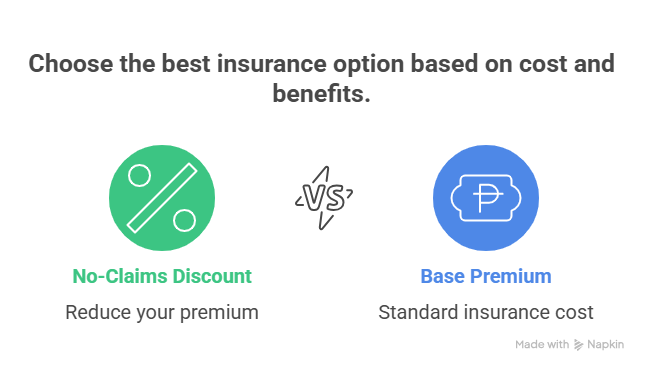
Here’s the short version: your NCD and your premium are different levers. A non-fault claim usually doesn’t cut your NCD if your insurer recovers its costs in full. But your price can still change because underwriters price risk, not blame. aviva.co.uk+2aviva.co.uk+2
In 2025, average UK motor premiums eased to £562 in Q2—still shaped by high repair and theft costs, which affect everyone at renewal. Price moves aren’t only about fault; they’re about market-wide claims costs and your past incidents. abi.org.uk+1
| Term | What it means | Why it matters |
|---|---|---|
| No-Claims Discount (NCD) | % discount for claim-free years | Non-fault + full recovery usually keeps NCD intact/reinstated |
| Premium (base price) | The underlying price of your policy | Can still rise after a non-fault incident due to risk modelling and market costs |
| Incident history | All accidents/claims you disclose | Most providers ask about ~5 years; it informs pricing |
A non-fault claim usually doesn’t reduce your No-Claims Discount if your insurer recovers its outlay in full. However, your premium can still rise because insurers price risk using your complete incident history—even when you weren’t to blame. Most providers ask about accidents over ~5 years, and claims data is kept on industry databases for up to 6 years after closure. MIB+3aviva.co.uk+3aviva.co
The quick truth: what
changes—and what usually
doesn’t
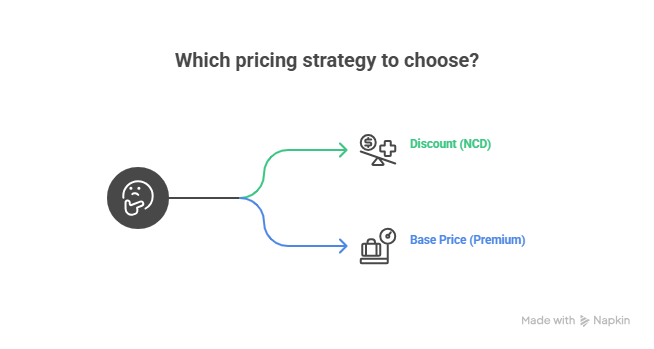
NCD vs your premium (two separate levers)
Think of NCD as your discount and premium as the ticket price. If your insurer gets 100% of its costs back from the at-fault insurer, your NCD is typically preserved or reinstated. But your premium can still change because the incident sits on your record and risk models read “one incident” as “statistically more likely to claim again.” aviva.co.uk+2aviva.co.uk+2
| Scenario | NCD impact | Likely premium impact | Why |
|---|---|---|---|
| Non-fault, full recovery | Intact or reinstated | May change slightly | Incident recorded → risk-based pricing, market costs still apply [aviva.co.uk] |
| Non-fault, partial recovery/split liability | Can step back | Often higher change | Not all costs recovered → treated closer to part-fault [aviva.co.uk] |
| Protected NCD, fault claim | Discount protected | Base price can still rise | Protection ≠ price freeze; protects discount only [aviva.co.uk] |
Why prices can change even
when you weren’t at fault
Insurers price probability, not blame
Underwriters use many inputs: incident frequency, mileage/exposure, vehicle group, postcode risk, and previous claims (fault or not). One recorded incident nudges your risk profile statistically—even if you did nothing wrong. That’s why the price can move when your NCD doesn’t. Compare the Market
The market matters too
Across the market, claims costs—repairs, parts, and theft—drive premiums. In 2025, the ABI reported an average premium of £562 (Q2), but flagged that repair and theft costs remain elevated; the FCA’s 2025 review also links price pressures to sustained claims inflation. Your renewal reflects both you and the market. abi.org.uk+1
“I paid for Protected NCD—why did my price still rise?”
Because protected NCD shields the discount, not the underlying price. If claim frequency or market costs rise, your premium can still change—even with the same NCD percentage applied. aviva.co.uk

Your record and disclosure
window (what to say—and
for how long)
How long you’ll be asked about incidents
Most providers ask about claims/accidents over ~5 years at quote or renewal (some vary). Declaring accurately isn’t optional; non-disclosure can invalidate cover. Compare the Market
Where the data lives
The Claims and Underwriting Exchange (CUE) stores claim information for 6 years from the date the claim was closed. That data is visible to participating insurers when they assess risk and price. MIB
Practical implications
Keep a simple log with dates, ref numbers, and outcomes.
If an incident shows incorrectly, request a correction with evidence.
Don’t assume a non-fault claim “doesn’t count”—it must still be declared.
| What to declare | Typical look-back at renewal | Where it’s stored |
|---|---|---|
| All accidents/claims (fault and non-fault) | Usually ~5 years (varies by insurer) | CUE database: 6 years from claim closure [Compare the Market] |
What you can control
(to minimise impact)
Build a strong evidence trail
Photos from multiple angles at the scene
Dashcam clip (copy backed up)
Witness names and contact details
Police/incident reference number
Keep receipts (towing, storage) and repair estimates
Good evidence helps the at-fault insurer reimburse your insurer in full—supporting NCD preservation. aviva.co.uk
Report accurately and choose the right pathway
Log the incident with your insurer or coordinator quickly and accurately.
For non-fault, avoid claiming on your own policy for extras you don’t need—focus on the third-party’s liability path where appropriate.
Keep timelines tidy; follow up politely and document everything.
When your vehicle is off the road, arrange support that doesn’t derail recovery: a like-for-like replacement vehicle for personal, taxi-plated or delivery use; 24-hour recovery & secure storage to prevent secondary losses; and manufacturer-standard repairs to restore value.
Shop smart at renewal
Compare more than one insurer; some rate non-fault incidents more heavily than others.
Check the look-back period each brand uses for incidents (commonly ~5 years).
Consider Protected NCD if it suits your profile—just remember it doesn’t freeze your base price. aviva.co.uk
Working drivers (taxi/PHV, van, bike)
Higher annual mileage and dense urban exposure can magnify how incidents are read in pricing.
Keep duty logs and booking records; store helmet/dashcam footage safely.
When work depends on the vehicle, coordinate replacement hire that’s compliant (e.g., taxi-plated) so earnings aren’t interrupted while liability is settled.
Mandatory Disclaimer
Accident Assist Network assists you after a non-fault accident by co-ordinating vehicle recovery, reputable repairs, cash-in-lieu settlements for total-loss vehicles and like-for-like replacement hire—whether for personal use, licensed taxi work or bike—through our network of independent specialist companies across England. Because our role is one of practical facilitation rather than financial advice, we are not authorised by the Financial Conduct Authority, and our services are not covered by the Financial Ombudsman Service or the Financial Services Compensation Scheme. If the at-fault insurer delays or disputes payment you may become liable for credit services or other charges set out in your contract. Please read every document thoroughly and, if anything is unclear, ask us—or an independent adviser—before signing. We are happy to guide you in the language you feel most comfortable with.”
Need practical help in England?
Call: 020 4577 1120 · WhatsApp: 07585 300 600
When timing matters, you can speak to a friendly coordinator to arrange recovery or a like-for-like car without delaying third-party recovery.
FAQS
Yes—many insurers rate risk using your full incident history, so a non-fault claim can still change your price even if NCD remains intact.
If your insurer recovers its costs in full from the at-fault party, your NCD is typically unaffected or reinstated.
Providers usually ask about ~5 years of incidents. Separately, claims data is stored on the CUE database for 6 years from claim closure.
No. It protects the discount, not the base price. Your premium may still change due to incident history and market costs.
Gather strong evidence, report accurately, keep receipts, and coordinate like-for-like mobility and proper repairs while liability is resolved. That supports full recovery and protects NCD.