Accident Claim Eligibility: Do You Qualify for Non-Fault Support? [Free Check]
You’ve just been in a non-fault accident. Your car is damaged, you are standing by the side of the road feeling shaken, and you honestly don’t know what to do next. It is completely overwhelming—especially when you are suddenly forced to deal with the shock of the impact, dense insurance jargon, and the immediate, terrifying worry about unexpected repair costs or losing your hard-earned no-claims bonus.

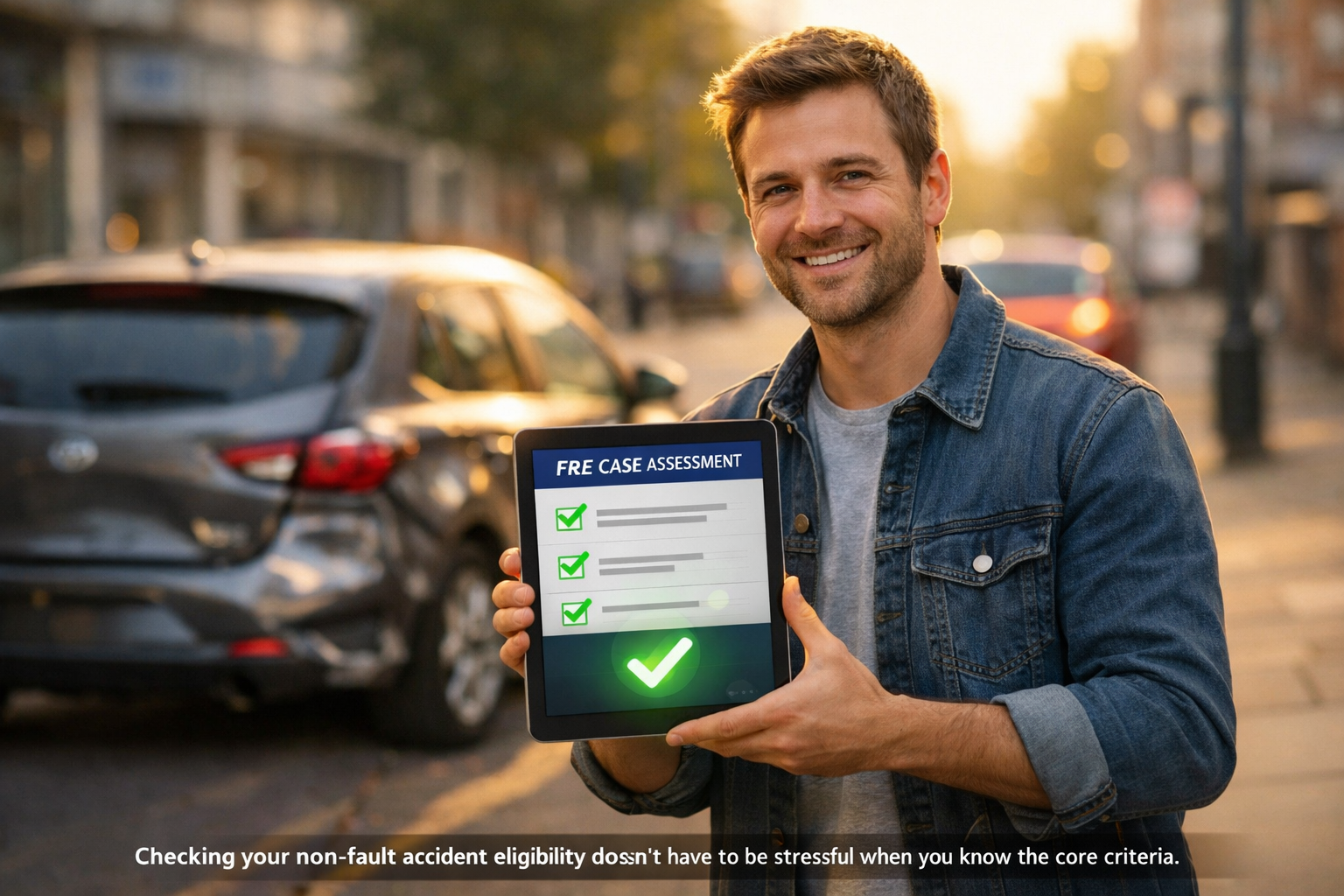
💡 QUICK ANSWER: Are you eligible for non-fault accident support?
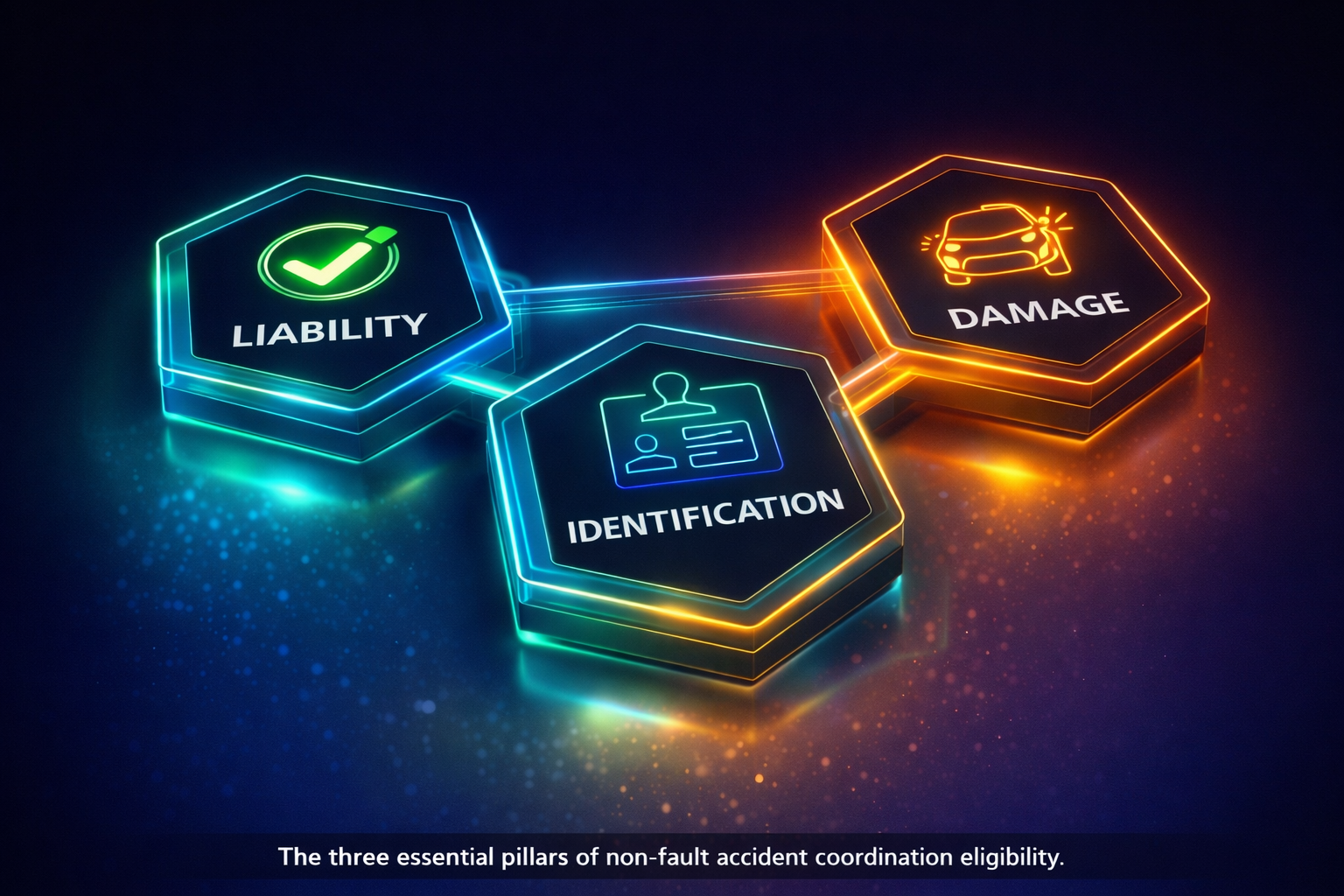
If you have been involved in a collision that was not your fault, your immediate priority is establishing your rights. To qualify for £0 upfront vehicle recovery, a like-for-like replacement car, and manufacturer-standard repairs, you generally need three things:
- The other driver must be at fault.
- The at-fault party must be identifiable and insured.
- Your vehicle must have suffered damage.
You do not have to use your own insurance company's chosen repairers, and you are legally entitled to be put back into the position you were in before the crash occurred.
This guide walks you through the exact steps to take in the first 24 hours to check your accident claim eligibility, protecting your rights and minimising your stress. Let's start with the one thing most people get wrong about their rights—and how you can avoid making a costly mistake.
Stressed after an accident? Call 020 4577 1120 for 24/7 help. WhatsApp easier? Text 07585 300 600. We speak English, Romanian, Urdu, Tamil, and Hindi.
Call a trustworthy friend
020 4577 1120. We're here 24/7 to walk you through every step. Your no-claims bonus is protected. WhatsApp 07585 300 600 for immediate support.
The Stress Of The Unknown: Why Drivers Hesitate To Claim
Why do drivers delay checking their non-fault accident claim eligibility?
Quick Answer: Drivers delay checking their non-fault claim eligibility primarily due to the fear of hidden costs, the anxiety of losing their no-claims discount, and widespread confusion over complex insurance terminology. Many mistakenly believe that seeking independent assistance will automatically result in massive upfront fees or prolonged legal battles.
When an accident happens, the physical impact is often followed immediately by a wave of administrative panic. You are left staring at a dented bumper or a completely undriveable vehicle, wondering how you are going to get to work tomorrow, how you will manage the school run, or—if you are a professional driver—how you will protect your weekly income. Instead of seeking immediate help, many drivers freeze. They hesitate because the UK motor claims system is notoriously difficult to navigate without a guide.
Many drivers on the Honest John forums report immense frustration when trying to figure out if they qualify for a replacement vehicle, often citing confusing and contradictory advice from their own insurers regarding their excess payments. Similarly, one user on Reddit's r/LegalAdviceUK shared a common fear: “I was hit from behind at a junction, but I was terrified to claim because I thought I’d lose my no-claims bonus before liability was officially proven.” This hesitation is incredibly common, but it can lead to unnecessary delays in your mobility and vehicle repair.
According to guidelines from the Financial Ombudsman Service, when an accident is not your fault, you have specific legal rights regarding how your vehicle is repaired and replaced. However, knowing your rights and actually enforcing them are two different things.
Common Fears Holding Drivers Back:
- The Excess Trap: Worrying that you must pay a £500+ excess fee just to get the repair process started, even when you did nothing wrong.
- The Mobility Gap: Fearing that you will be left without a vehicle for weeks, or handed a tiny 1.0L courtesy car that cannot accommodate your family or your professional licensing needs (such as TfL requirements).
- The Premium Penalty: Believing that simply reporting the incident or using an accident management service will automatically cause next year's insurance premiums to skyrocket.
- The Language Barrier: Struggling to understand dense policy documents written in complex legal English, leading to a fear of signing something you don't fully comprehend.
Skip this eligibility check, and your vehicle recovery timeline can easily extend by weeks. Let's prevent that by looking at the specific rules. →
🎬 Watch video guide about accident claim eligibility
Watch the video guide for a clear overview of non-fault support, your rights after a collision, and the steps to protect your claim.
Because Asking is the first step
How do I check if I qualify for non-fault accident support?
Am I Eligible? The 3 Core Rules For Non-Fault Support
What are the exact criteria to qualify for non-fault accident support?
Quick Answer: To qualify for independent non-fault accident coordination, three core criteria must be met: liability must rest with the other driver, the third party must be identifiable and possess valid insurance, and your vehicle must have sustained physical damage requiring repair or valuation.
Understanding your accident claim eligibility doesn't require a law degree. It essentially boils down to establishing the facts of the incident and ensuring the basic legal requirements are met to pursue a claim against the at-fault party's insurance. If you meet these three criteria, you are generally in a strong position to receive £0 upfront coordination for your vehicle recovery, replacement hire, and repairs.
First, the other driver must be at fault. This is the foundation of any non-fault claim. In legal terms, this means the third party breached their duty of care on the road, resulting in the collision. Classic examples include being rear-ended while stationary at a red light, or a driver pulling out of a side road directly into your path without giving way. If liability is split (e.g., a 50/50 decision where both parties share blame), the process becomes significantly more complicated, and standard non-fault credit hire services may not be applicable.
Second, the third party must be identifiable and insured. You need their registration number at an absolute minimum. If you are the victim of a hit-and-run, or if the driver is uninsured, you may still have options, but they typically involve claiming through the Motor Insurers' Bureau (MIB) rather than standard independent coordination. Finally, your vehicle must have suffered damage. At Accident Assist Network, our scope is strictly limited to vehicle damage, recovery, and replacement mobility; we do not handle Personal Injury (PI) claims or medical evaluations.

1. Liability and third-party details confirmed.

2. Vehicle damage assessed for repair or replacement support.
The 60-Second Eligibility Checklist:
- Liability: Did the other driver cause the collision? (Yes/No)
- Identification: Do you have the at-fault vehicle's registration number? (Yes/No)
- Insurance: Is the at-fault vehicle insured? (Yes/No - Note: If unsure, this can often be checked via industry databases later, provided you have the registration plate.)
- Damage: Is your vehicle damaged and in need of repair or replacement? (Yes/No)
- Location: Did the accident occur within England? (Yes/No)
If you answered “Yes” to these questions, you likely qualify for comprehensive, £0 upfront support. Now, here's where it gets interesting, because “fault” isn't always black and white. →
Ready to get your life back? Call 020 4577 1120 now for immediate recovery & replacement hire coordination. Or WhatsApp 07585 300 600 if that’s easier. 0 upfront cost.
Because Asking is the first step
Can Accident Assist Network arrange repairs after a non-fault accident?
Case Example: When “Fault” Isn't Immediately Clear
Can I still claim if the non-fault accident liability is disputed?
Quick Answer: Yes, you can still explore your options if liability is disputed, but it requires careful professional assessment. If the at-fault driver denies responsibility, independent coordinators will evaluate the available evidence—such as dashcam footage, witness statements, and police reports—to determine if a non-fault claim is still viable before proceeding.
Not every accident is a straightforward rear-end collision at a traffic light. Often, the moments following an impact are chaotic, and the other driver may initially apologise, only to completely change their story when they speak to their insurance company days later. This is why establishing accident claim eligibility sometimes requires a deeper look at the evidence you manage to collect at the scene.
Imagine a fictional scenario involving Marcus, a courier driving a transit van in Central London. Marcus is navigating a large multi-lane roundabout when a driver in the inner lane suddenly cuts across his path to take an exit, swiping the front offside of Marcus's van. At the scene, the other driver is apologetic. However, a week later, the third-party insurer disputes the claim, arguing that Marcus was in their blind spot and accelerated aggressively. Because Marcus is a courier, being off the road means an immediate halt to his income. He needs a replacement van urgently, but the disputed liability makes him nervous about incurring credit hire charges.
In grey areas like roundabout collisions, car park scrapes, or lane-change incidents, the quality of your evidence is the deciding factor. The Highway Code (Source: Gov.uk) sets out the rules of the road, and insurers use these rules to apportion blame. If you have independent witness details, clear photographs of the vehicle positions before they were moved, or—crucially—dashcam footage, a disputed claim can often be successfully challenged and resolved in your favour.
Evidence That Strengthens Your Eligibility:
- Dashcam Footage: The most objective and powerful tool for proving liability beyond doubt.
- Photographs: Wide-angle shots of the road layout, vehicle positions, skid marks, and weather conditions.
- Witness Details: Names and phone numbers of independent bystanders (passengers in your own car carry less weight).
- Police Reference Numbers: If the police attended the scene, their incident report is highly valuable.
- CCTV: Footage from nearby shops, petrol stations, or traffic cameras.
Without this solid evidence, you could be liable for costs if the third party successfully denies fault. Let's prevent that by understanding exactly how the facilitation process works. →
What Happens Once You Qualify? The Coordination Process
How does the non-fault replacement vehicle and repair process work?
Quick Answer: Once you qualify, the coordination process involves arranging immediate vehicle recovery, providing a like-for-like replacement vehicle within 24 hours, and organising manufacturer-standard repairs. The management service facilitates these steps on a credit basis, aiming to recover all associated costs directly from the at-fault driver’s insurance company.
When you have been in a non-fault accident and your eligibility is confirmed, the immediate goal is to restore your mobility and begin the repair process without demanding a penny from your own pocket upfront. At Accident Assist Network, we act as a practical facilitator. We leverage a network of independent specialist companies to sort out the logistics so you don't have to spend hours on hold with insurance call centres.
For professional drivers like London taxi operators or couriers, this speed is absolutely vital. If your TfL-plated vehicle is off the road, you are losing money every single hour. A standard insurer might offer you a small, standard courtesy car that you legally cannot use to pick up passengers. A specialist coordination service, however, focuses on a like-for-like replacement. If you drive a PCO-licensed 7-seater, the goal is to provide a PCO-licensed 7-seater within 24 hours, ensuring your business continuity is protected while your own vehicle is assessed.
The process is designed to be transparent and straightforward. We handle the communication and coordination, translating complex industry terms into plain English. Whether you prefer to speak in English, Romanian, Urdu, Tamil, or Hindi, our team ensures you understand exactly what is happening at every stage of the recovery and repair timeline.

| Stage | What Happens | Typical Timeline | Your Responsibility |
|---|---|---|---|
| 1. Free Assessment | We review your accident details, establish liability evidence, and confirm your eligibility. | Within 1-2 hours of your call. | Provide honest, accurate details and any dashcam/photo evidence. |
| 2. Recovery & Storage | If your car is undriveable, it is safely recovered from the roadside and placed in secure storage. | Immediate / Same Day. | Remove personal belongings from the vehicle. |
| 3. Replacement Hire | A like-for-like vehicle (including taxi-plated or commercial vans) is delivered to you. | Aim is within 24 hours. | Sign the credit hire agreement after reading terms carefully. |
| 4. Repairs / Settlement | Your vehicle undergoes manufacturer-standard repairs, or a cash-in-lieu settlement is negotiated if it's a total loss. | Varies by damage severity. | Authorise repairs and await completion. |
Now that you understand the timeline, let's look at the most important aspect: who pays for all of this, and what your financial responsibilities are. →
Because Asking is the first step
How quickly can I get a replacement vehicle after an accident?
Protecting Your Peace Of Mind: £0 Upfront Costs Explained
Do I have to pay upfront fees for non-fault accident assistance?
Quick Answer: No, you do not pay upfront fees for non-fault accident coordination services like credit hire or recovery. The costs are deferred and formulated as a claim against the at-fault driver's insurance. However, it is vital to understand that if the third-party insurer successfully disputes the claim, you may become liable for these charges.
The most common question we hear from stressed drivers is: “How much is this going to cost me?” The short answer, regarding upfront payments, is zero. When you use a credit hire and repair facilitation service for a non-fault claim, you are not asked to hand over your credit card to pay for the tow truck, the storage facility, or the daily rental rate of the replacement vehicle. Instead, these services are provided on credit.
Here is how the system is designed to work: the independent specialist companies we coordinate with will provide the services you need today, and they will present the bill directly to the at-fault driver's insurance company tomorrow. This mechanism is governed by specific industry agreements and legal precedents designed to protect innocent victims. For instance, the Association of British Insurers (ABI) outlines various protocols for how insurers handle claims and subrogation (the process of recovering costs).
However, transparency is our core value, which means we must explain the limitations and potential risks alongside the benefits. Because these services are provided on a credit agreement, you are ultimately signing a contract. Our partner companies will always endeavour to recover costs entirely from the at-fault insurer. But, if that insurer delays heavily, or if new evidence emerges proving you were actually at fault (or partially at fault), the third-party insurer may refuse to pay. In such specific circumstances, you may become liable for the credit services or other charges set out in your contract.
Be 100% Honest
Accurate reporting prevents liability disputes later.
Read the Paperwork
Each partner company supplies its own terms and conditions in agreements. Read every document thoroughly.
Ask Questions
If anything in the credit hire agreement is unclear, ask us. We explain things in plain English, with no jargon.
Understand the Scope
Remember that AAN facilitates vehicle damage, recovery, and hire. We do not handle Personal Injury claims or provide financial advice.
By understanding both the immense benefits of £0 upfront coordination and the contractual realities, you can make an informed, confident decision. →
Call a trustworthy friend
020 4577 1120. We're here 24/7 to walk you through every step. Your no-claims bonus is protected. WhatsApp 07585 300 600 for immediate support.
Because Asking is the first step
Do I have to pay upfront fees for non-fault accident assistance?
Conclusion: Get Your Free Case Assessment Today
Navigating the aftermath of a road traffic collision is exhausting, but determining your accident claim eligibility shouldn't add to your stress. Whether you are a family driver needing the school-run car replaced, a courier anxious about missing deliveries, or a London taxi driver whose income depends on a PCO-plated vehicle, you have rights.
At Accident Assist Network, our friend-first approach means we listen to your situation, assess your eligibility for free, and coordinate the practical steps necessary to get you back on the road. We promise £0 upfront costs, clear communication in your preferred language, and transparent guidance regarding partner agreements. You don't have to fight the insurers alone, and you shouldn't have to pay for someone else's careless driving.
Take Action Now: If you have been in a non-fault accident in England, reach out today for a completely free, no-obligation case assessment. Save our numbers in your phone, just in case you ever need a trustworthy friend by the roadside.
💬 Interactive Engagement: What Would You Do?
Scenario: You are driving home from the supermarket, and while waiting at a red light, another driver bumps into your rear bumper. They get out, apologise profusely, say there isn't much damage, and offer to give you £200 cash to fix the scratch without getting insurance or authorities involved.
Consider your next move:
- Do you take the cash to avoid the hassle of paperwork?
- Do you insist on taking their insurance details and registration, just in case the damage is structurally worse beneath the bumper?
- Do you call a post-accident coordination service for advice from the roadside?
Our Advice: Never accept roadside cash offers. What looks like a scratch can often hide severe structural damage to parking sensors, crash bars, or the chassis, costing thousands to fix. Always exchange details, take photos, and call a professional for a free case assessment to protect your rights.
Call a trustworthy friend
020 4577 1120. We're here 24/7 to walk you through every step. Your no-claims bonus is protected. WhatsApp 07585 300 600 for immediate support.
FAQs About Non-Fault Accident Eligibility
1. How do I prove I am not at fault in a car accident?
2. Will my insurance premium go up if the accident wasn't my fault?
3. Do I have to pay my excess if the crash wasn't my fault?
4. Can I choose who repairs my car after an accident?
5. What happens if the at-fault driver is uninsured?
6. How long does a non-fault claim take to resolve?
7. Do you provide support for taxi drivers and couriers?
Sources & References
Accident Assist Network assists you after a non-fault accident by co-ordinating vehicle recovery, reputable repairs, cash-in-lieu settlements for total-loss vehicles, and like-for-like replacement hire—whether for personal use, licensed taxi work or bike—through our network of independent specialist companies across England. Your one call and we sort it all.
Because our role is one of practical facilitation rather than financial advice, we are not authorised by the Financial Conduct Authority, and our services are not covered by the Financial Ombudsman Service or the Financial Services Compensation Scheme.
Our partner companies will always endeavour to help you recover costs from the at-fault insurer; however, if that insurer delays or disputes payment you may become liable for credit services or other charges set out in your contract. Each partner company will supply its own terms and conditions in agreements. Please read every document thoroughly and, if anything is unclear, ask us—or an independent adviser—before signing. We are happy to guide you in the language you feel most comfortable with.
Need practical help in England? Call 020 4577 1120 | WhatsApp 07585 300 600
Raheel A Rathore
Senior Claims Coordinator | Accident Assist Network