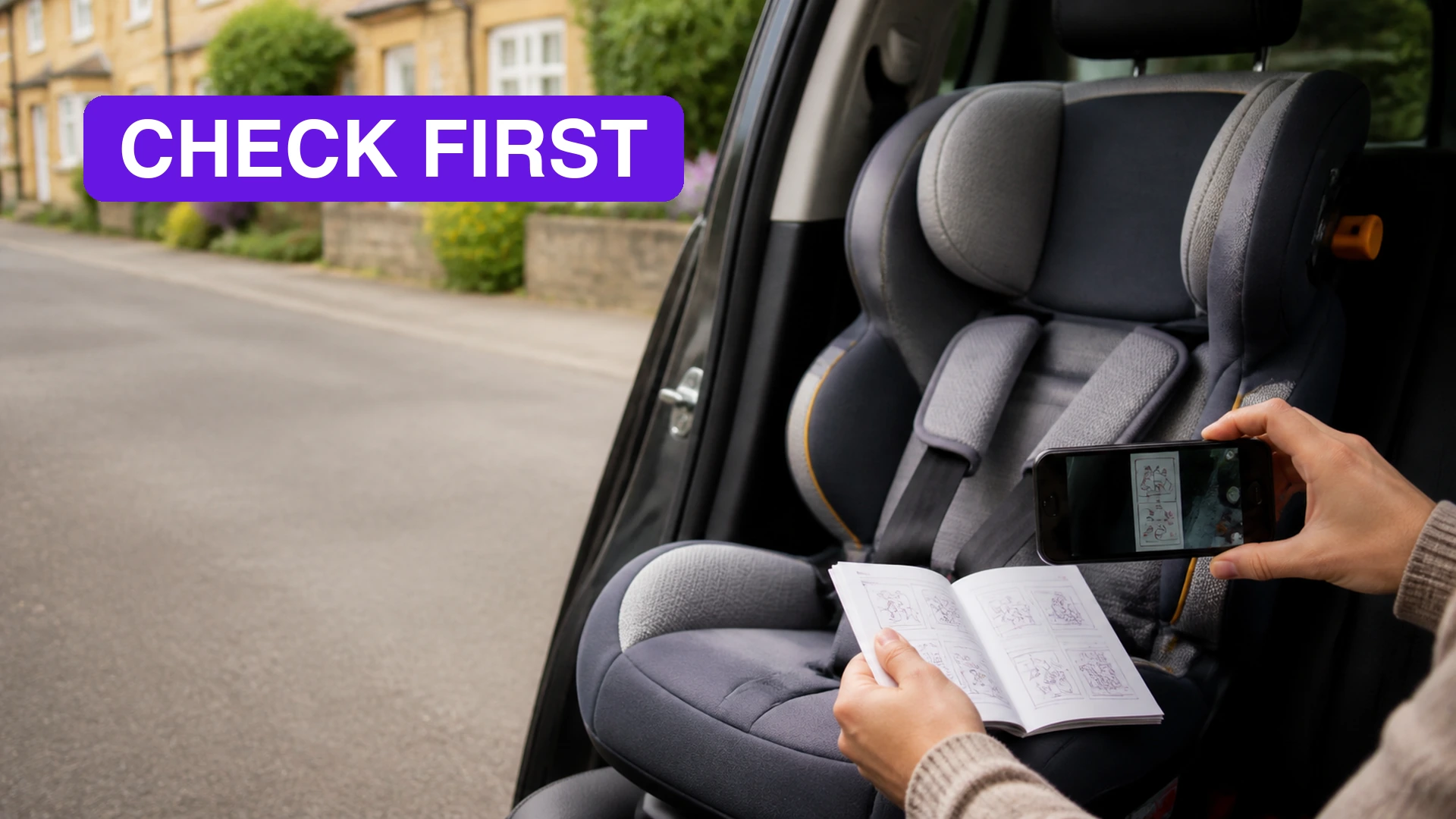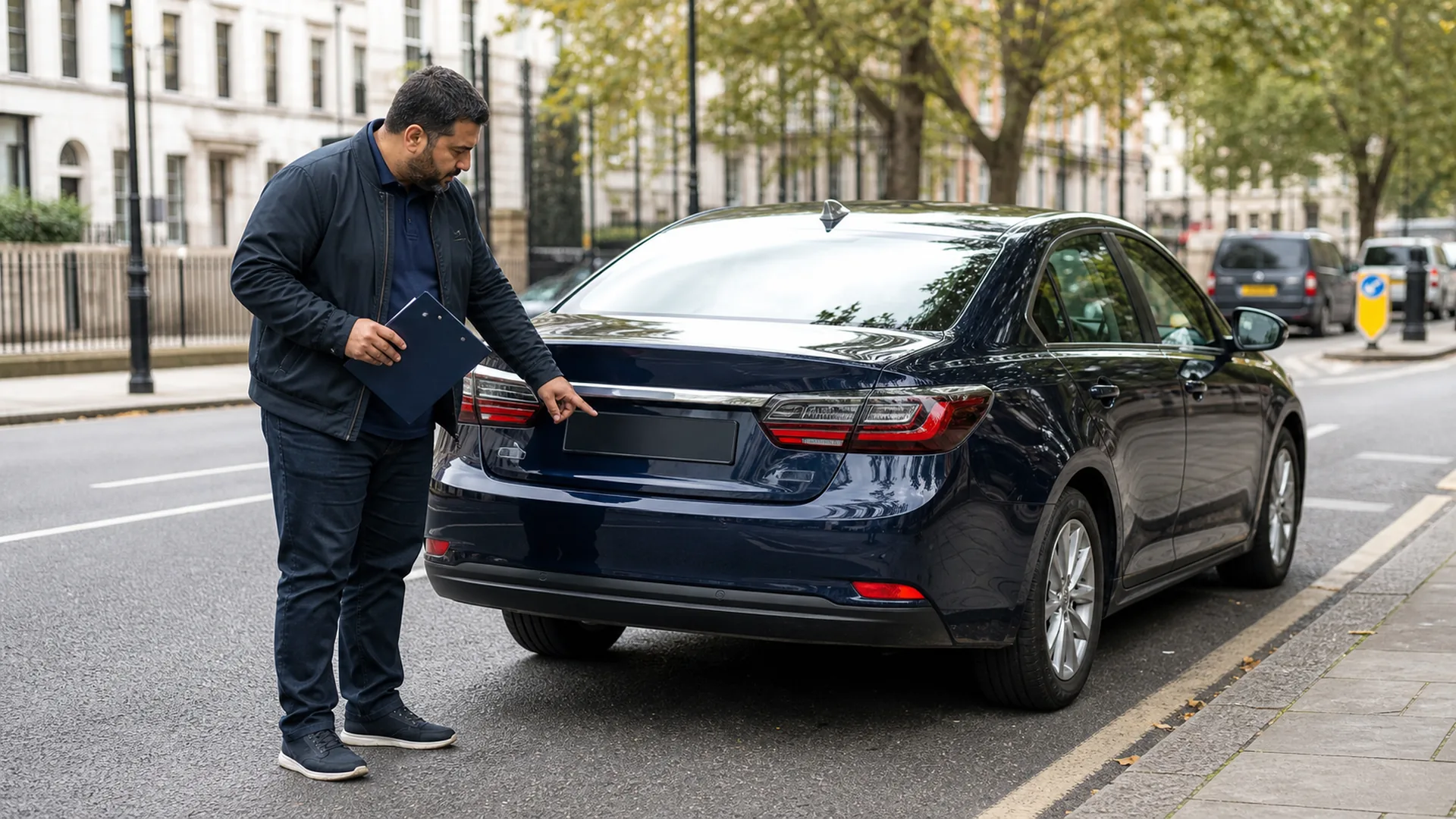


Prepare your PHV inspection documents, vehicle condition and compliance checks before your TfL appointment.
PCO Vehicle Inspection London 2026 – Driver Checklist
PCO vehicle inspection London 2026 guide for PHV drivers. Check TfL rules, documents, accident damage and repair support. Call 020 4577 1120 for help.

A pco vehicle inspection London 2026 check means preparing your TfL documents, vehicle condition and accident-damage plan before test day.
If your PHV inspection is close, small doubts can feel expensive. A cracked light, missing document or fresh scrape can stop a working driver from feeling ready. You need clear guidance, not forum panic or guesswork. This refined guide explains what TfL checks, what documents matter, how accident damage changes your route, and what Accident Assist Network can coordinate after a qualifying non-fault accident. Keep reading so you can separate official requirements from noise, prepare calmly, and know what to do before your vehicle reaches the inspection lane. The aim is clarity before pressure starts.
What TfL Checks
What matters before a PCO vehicle inspection?
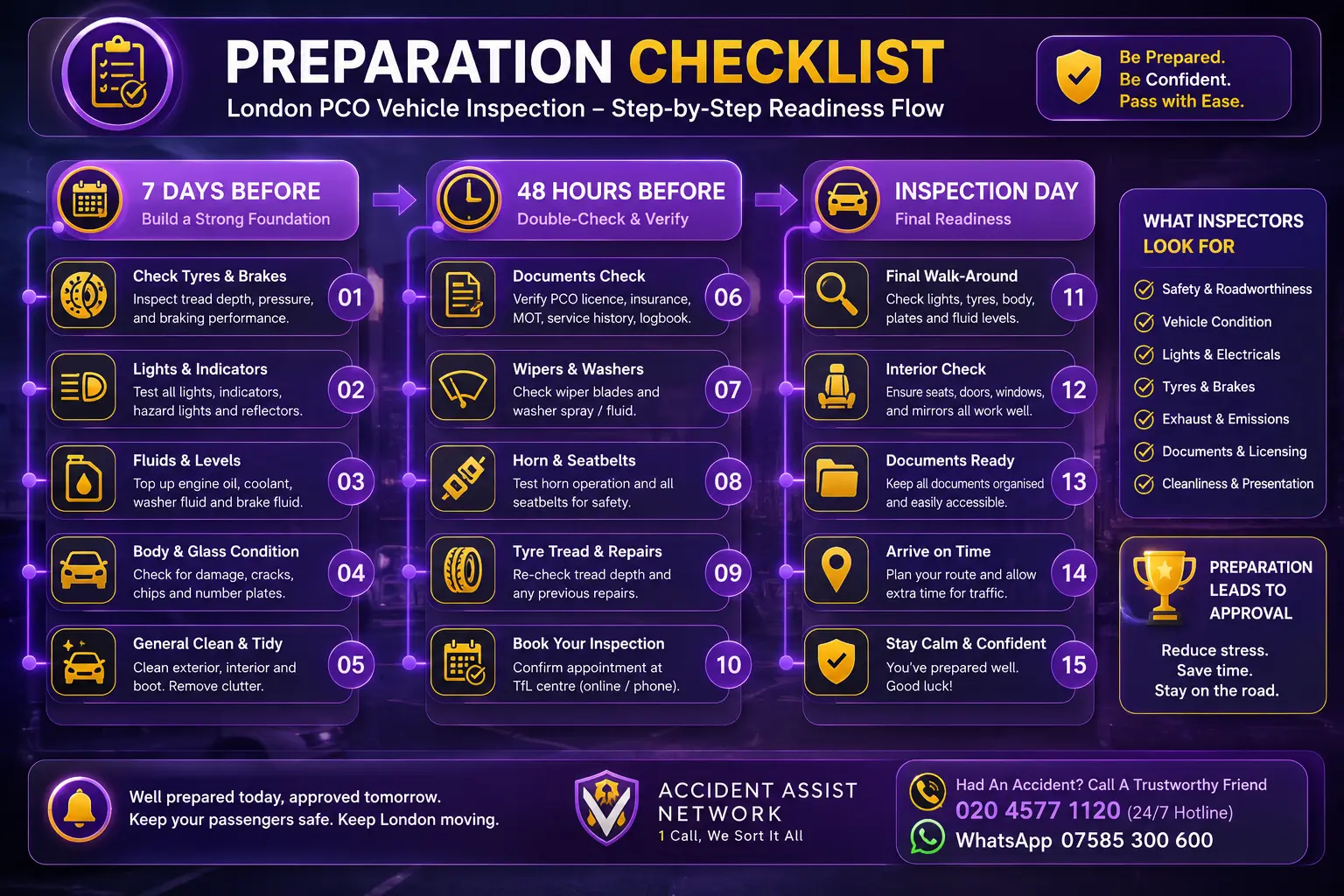
TfL inspection preparation is broader than a normal tidy-up. Your PHV must satisfy licensing, condition and documentation checks. Treat the inspection as a work-readiness review, because bodywork, lights, tyres, signage and paperwork can all affect whether your vehicle is ready.
Transport for London’s vehicle licence inspection manual describes itself as a working guide for owners, inspectors and people maintaining taxis and private hire vehicles in London. That matters because a PHV driver should not rely on a generic checklist alone. The official TfL route should be your first reference before any platform advice.
For a working driver, the biggest inspection risk is assuming the vehicle is acceptable because it still drives. Roadworthiness, correct documents, visible condition and signage all sit together. A clean body panel, working lights and current paperwork are not cosmetic details when your car is also your working asset.
Once you know what TfL checks, the next task is making sure your paperwork does not undermine a mechanically sound vehicle.
| Check Area | Why It Matters | Driver Action |
|---|---|---|
| Documents | TfL needs correct licence evidence | Prepare originals and current records |
| Vehicle condition | Damage can affect inspection readiness | Inspect bodywork, glass and lights |
| Signage | PHV display rules are specific | Check official TfL signage guidance |
Documents To Bring
Which papers should PHV drivers prepare?
A London PCO inspection can become stressful if your vehicle is ready but your documents are not. Prepare your V5C, hire-and-reward insurance evidence, MOT position and licence-related paperwork before the day, then store backup copies separately in case your phone fails.
TfL’s private hire vehicle licence guidance links drivers to the official inspection manual and confirms that PHV licensing has specific vehicle requirements. Since 1 January 2023, PHVs licensed for the first time must be zero emission capable and meet Euro 6 emissions standards. That rule should be checked before renewal planning.
Your document check should be boring by design. If anything feels uncertain, fix it before inspection day. A driver who waits until the morning of the appointment has less time to correct missing insurance evidence, an expired MOT position or a vehicle detail mismatch.
With the papers in order, you can separate official TfL requirements from operator preferences and driver-forum advice.
| Document | Reason | Check Timing |
|---|---|---|
| V5C | Confirms keeper and vehicle details | At least 7 days before |
| Hire-and-reward insurance | Supports private hire use | At least 48 hours before |
| MOT evidence | Supports roadworthiness position | Before booking or renewal |
TfL Rules vs Platform Advice
Why do PHV drivers hear conflicting advice?
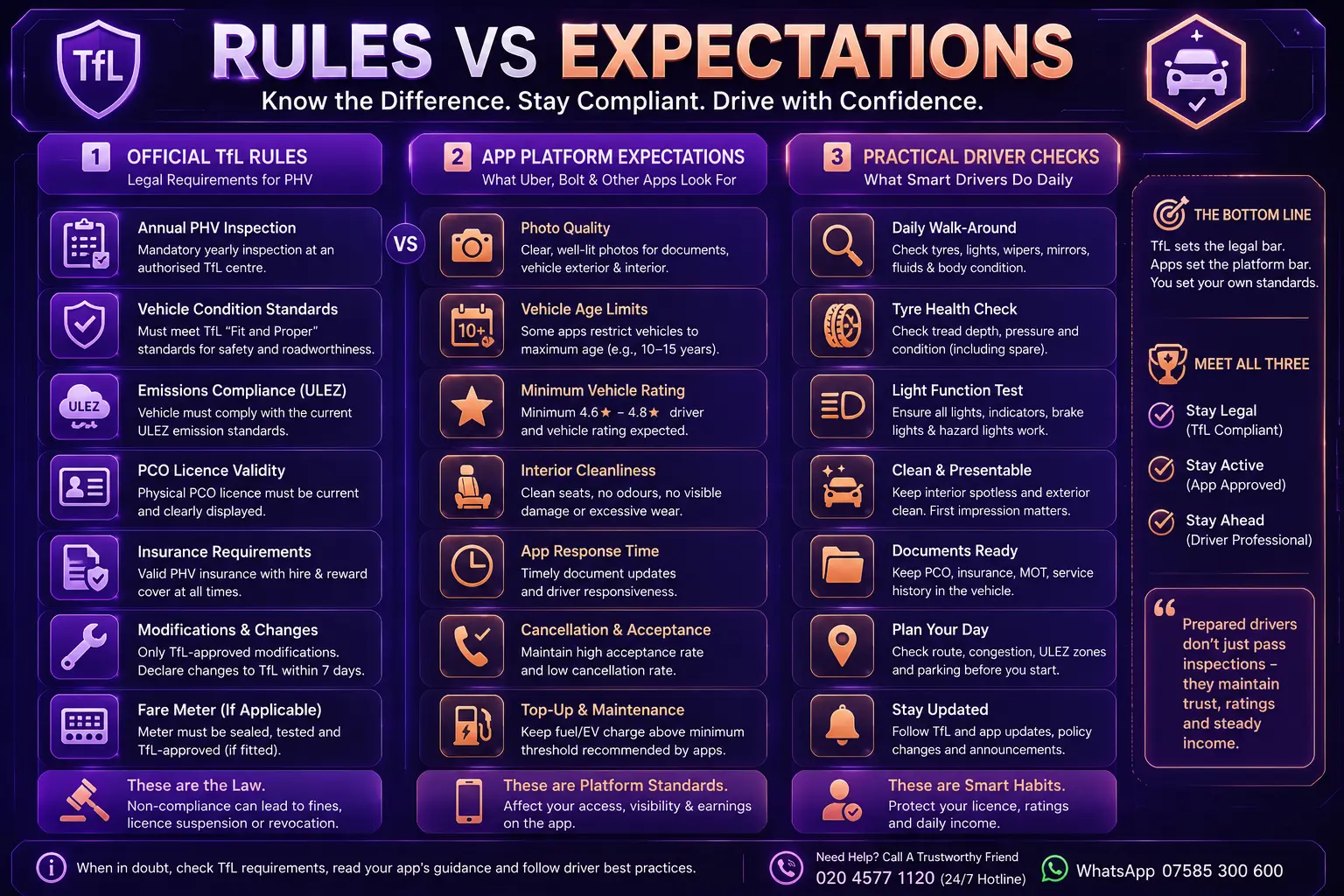
PHV drivers often hear advice from TfL, operators, rental companies and driver groups. Treat TfL guidance as the official inspection base, platform messages as additional work requirements, and driver comments as experience notes that still need checking against current official rules.
This distinction protects you from wasting money on the wrong problem. A platform may ask for a document upload, while TfL may need vehicle condition and licensing evidence. A rental company may have return rules that are stricter than TfL’s inspection manual. Each layer matters, but they are not the same.
Signage is a good example. TfL publishes separate signage guidance for taxis and PHVs, and the rules have changed in recent years. Driver groups may explain the practical side, but the official guidance should decide your final checklist before inspection.
The real pressure begins when your vehicle has damage before inspection, especially if the collision was not your fault.
| Advice Source | Use It For | Do Not Assume |
|---|---|---|
| TfL | Official licensing and inspection rules | That every forum tip is official |
| Platform | App or operator requirements | That it replaces TfL guidance |
| Driver groups | Practical experience | That every answer is current |

Accident Damage Before Inspection
What if damage appears before your inspection?
If your PHV has accident damage before inspection, do not guess. Photograph the damage, check whether the vehicle is safe and roadworthy, keep all details from the other driver, and arrange repair guidance before presenting the car or changing its condition.
GOV.UK says that after an accident causing damage, drivers must give their name, address and registration number to anyone with reasonable grounds to ask. If details are not exchanged at the time, the accident must be reported to police within 24 hours. That basic evidence route matters before any repair decision.
The ABI also advises drivers to tell their insurer about accidents, even if they do not intend to claim through their own policy. For a PHV driver, that means accident damage should be handled as both a claim-record issue and an inspection-readiness issue. Keep communication records in one folder.
Once damage is documented, the question becomes how long your vehicle may be off the road and what you can do to limit disruption.
| Action | Why It Helps | Keep Record |
|---|---|---|
| Photograph damage | Shows condition after impact | Images and timestamps |
| Exchange details | Supports the non-fault route | Driver and vehicle notes |
| Notify insurer | Protects policy compliance | Call logs and emails |
Control London PHV Downtime
How can PHV drivers protect working time?
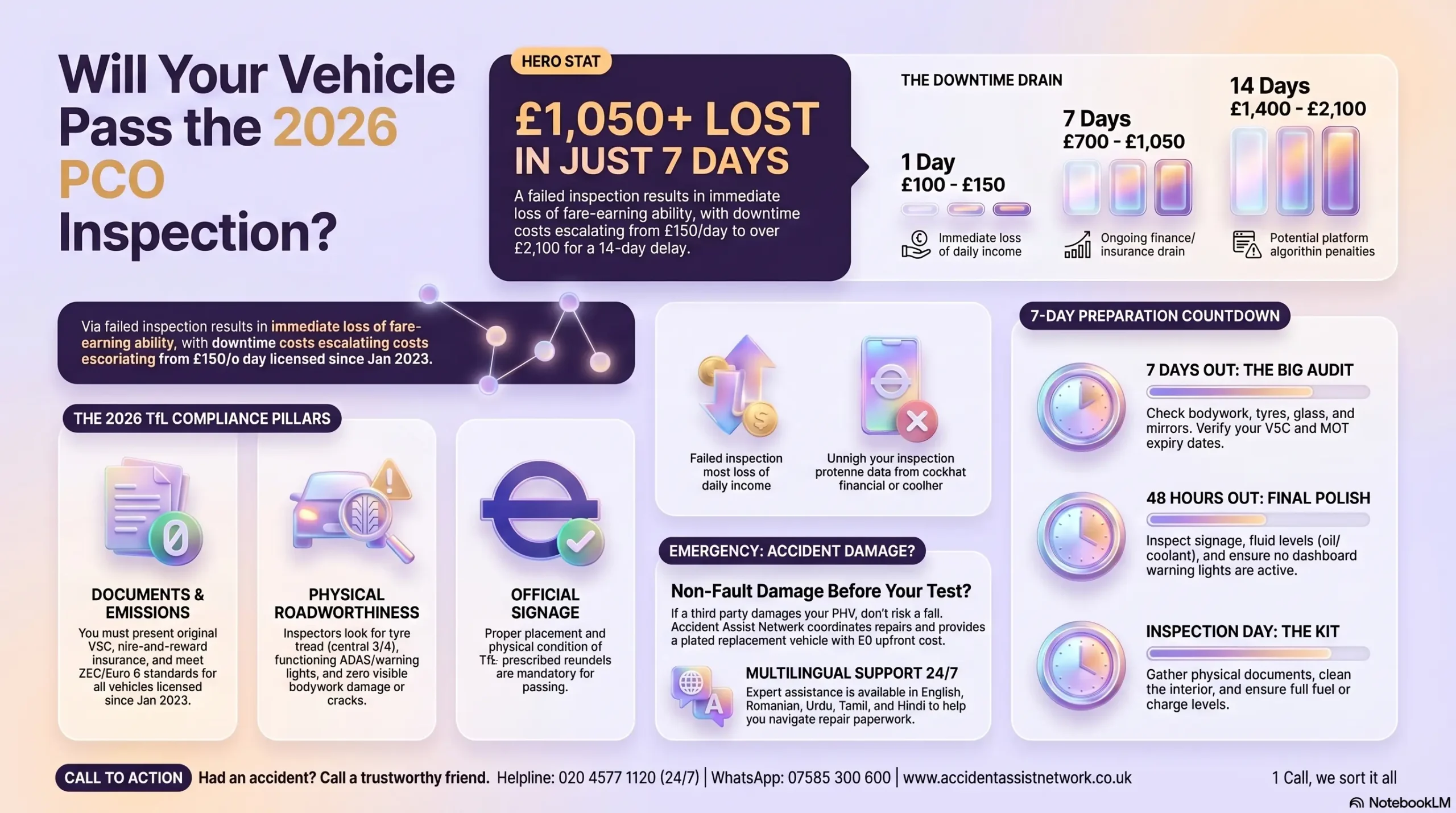
You control downtime by preparing early, documenting damage quickly and avoiding rushed decisions. Do not leave inspection checks until appointment day. Use a simple seven-day, forty-eight-hour and same-day routine so vehicle condition, documents, repairs and communication records stay organised without panic.
London PHV drivers operate in a high-pressure work environment, but the blog should not invent daily earnings or downtime losses. The reliable point is simpler: if your licensed vehicle cannot pass inspection or cannot be used safely, your work route is interrupted. That makes planning and evidence more valuable than guesswork.
Imagine a fictional PHV driver in Croydon whose inspection is booked for the next week. A third-party vehicle clips his parked car and cracks a rear light. The right move is not to hope it goes unnoticed. He photographs the damage, records driver details, checks insurance reporting duties and seeks repair coordination before the test.
If the collision was caused by another driver, the next section explains the non-fault repair and replacement route without overstating certainty.
| Timing | Driver Check | Outcome |
|---|---|---|
| 7 days before | Bodywork, tyres, documents | Early repair window |
| 48 hours before | Lights, signage, warning lights | Final issue spotting |
| Same day | Documents, cleanliness, fuel or charge | Calmer attendance |
Repair And Replacement Route
Can a non-fault route keep you prepared?
After qualifying non-fault accident damage, repair and replacement support may help a PHV driver stay organised while the damaged vehicle is assessed. The route depends on liability, evidence, vehicle suitability, partner terms, insurer response and inspection timing pressure for working drivers.
The Financial Ombudsman explains that credit hire and credit repair may be offered after a non-fault accident as an alternative to claiming through your own insurer. It says a hire vehicle is normally like-for-like or similar, while repairs may also be arranged. Those terms must still be read carefully.
MIB guidance is relevant where an accident involves an uninsured or untraced driver. It explains that claims follow the Uninsured Drivers’ Agreement or Untraced Drivers’ Agreement criteria. For a PHV driver, that means the source of liability can change the route, timing and paperwork needed.
Accident Assist Network should be used only where its vehicle-damage coordination role fits the situation. It does not decide TfL inspection outcomes, provide legal advice or manage medical issues. The practical value is helping you organise recovery, repair communication and replacement vehicle questions while you keep evidence and agreement terms clear.
Before you act, make sure the support route answers your real inspection problem, not just the visible vehicle damage.
| Route | Possible Use | Watch Point |
|---|---|---|
| Repair coordination | Vehicle damage assessment and repair route | Terms vary by partner |
| Like-for-like replacement | Work-use continuity where suitable | Suitability must be checked |
| MIB route | Uninsured or untraced driver cases | Eligibility criteria apply |
Poll: Your PHV inspection is in 48 hours and you find a cracked light. What would you do first: check TfL guidance, ask a driver group, attend anyway, or document the damage and arrange repair advice?
Accident Assist Network assists you after a non-fault accident by co-ordinating vehicle recovery, reputable repairs, cash-in-lieu settlements for total-loss vehicles, and like-for-like replacement hire — whether for personal use, licensed taxi work or bike — through our network of independent specialist companies across England. Your one call and we sort it all. Because our role is one of practical facilitation rather than financial advice, we are not authorised by the Financial Conduct Authority, and our services are not covered by the Financial Ombudsman Service or the Financial Services Compensation Scheme.