PCO Licence London: 7 Crash Mistakes New Drivers Make
PCO licence London guide for new drivers: avoid 7 post-crash mistakes, protect your TfL position, and get calm help after a non-fault accident.

🔍 QUICK ANSWER
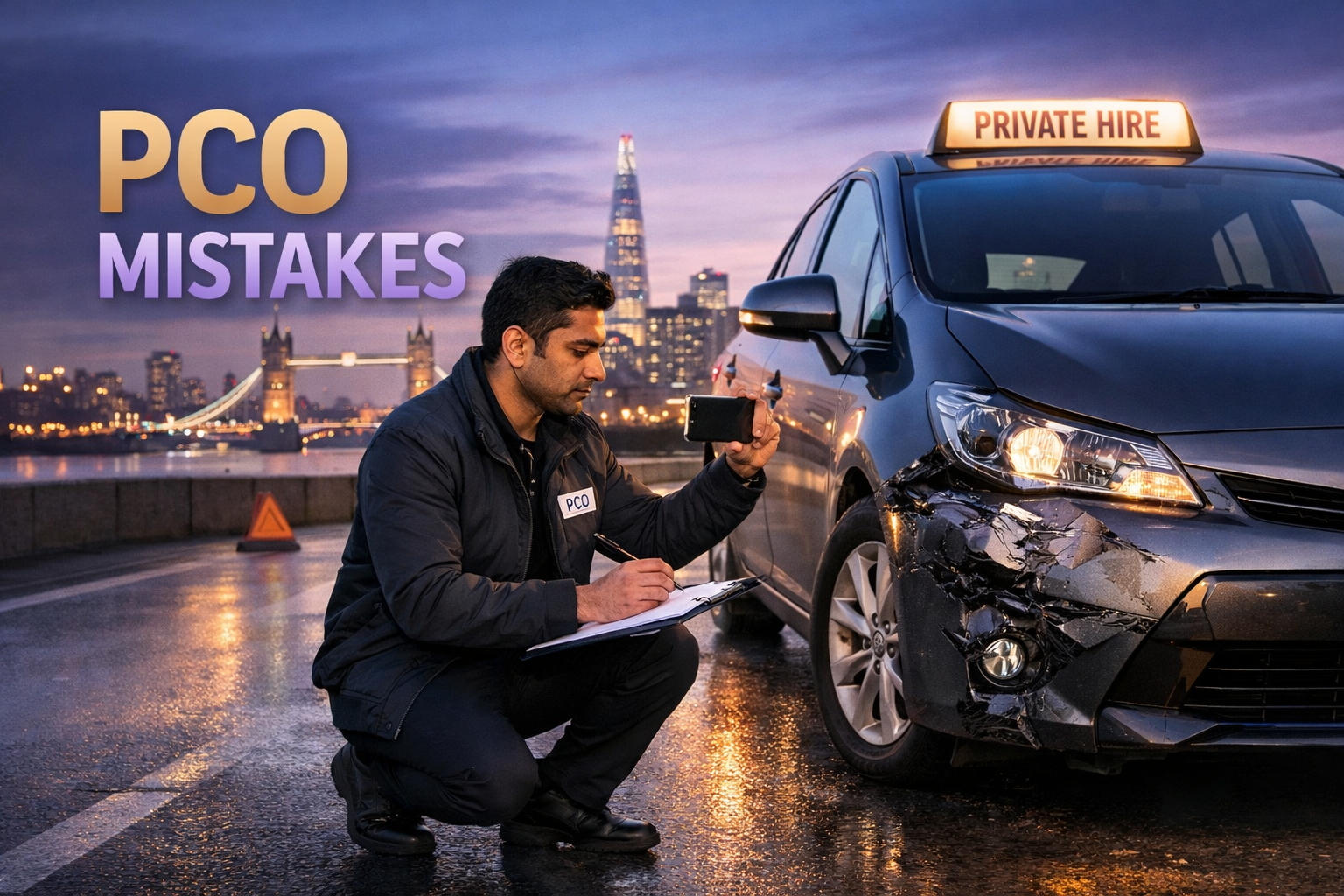
If you are a new private hire driver in London, the biggest post-crash mistake is treating the accident like a normal personal-car problem. A small collision can still stop your income if you accept the wrong recovery or replacement option.
- TfL duties, police duties, operator rules, and insurer communication are different from simply “getting home safely.”
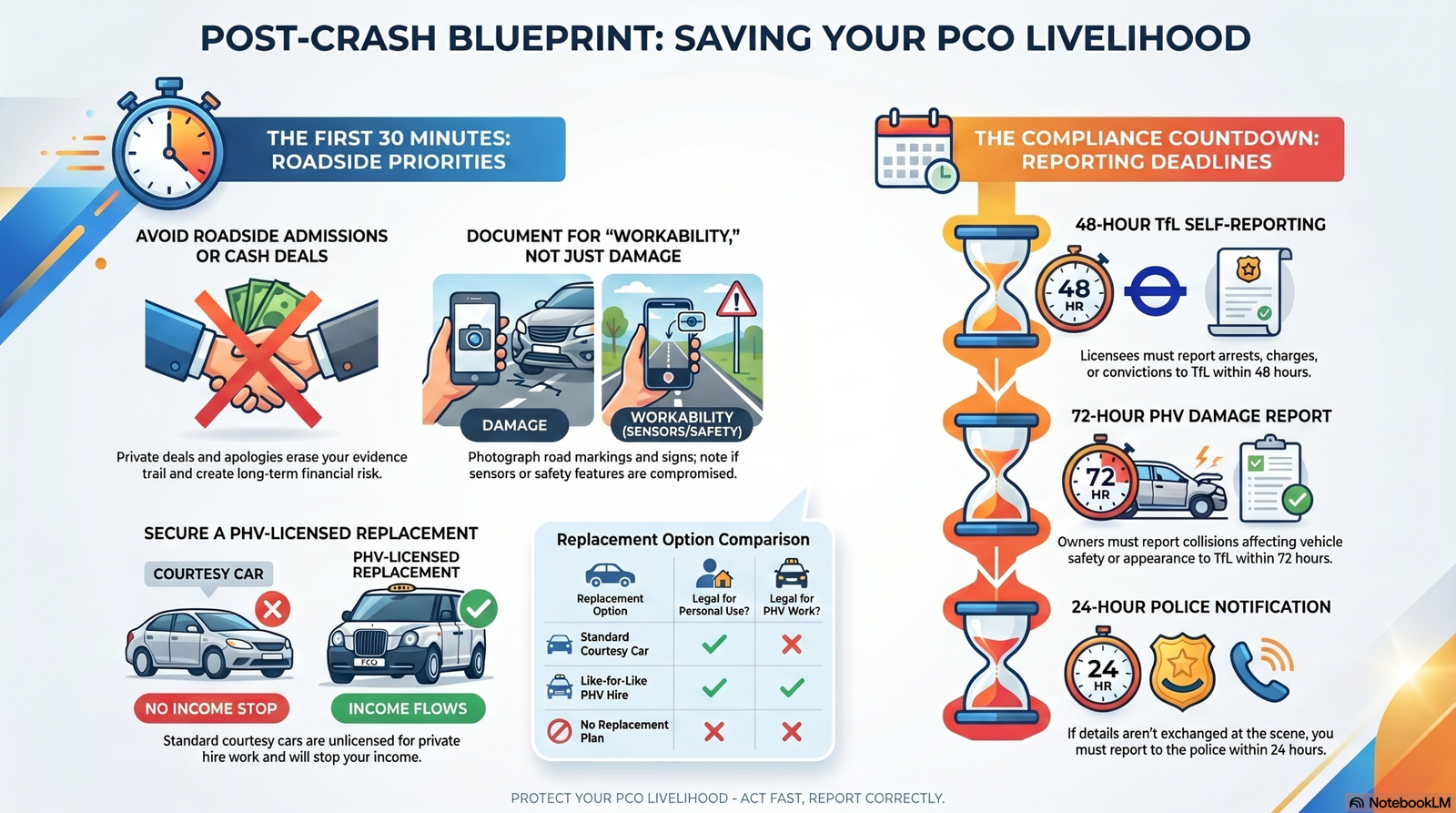
- If you own the PHV, damage that materially affects safety, performance, appearance or comfort must be reported to TfL within 72 hours. (Transport for London)
- TfL also requires licensee self-reporting within 48 hours for arrests, charges, cautions or convictions. (Transport for London)
- Your first goal is not just to move again. It is to protect your working position without creating fresh risk.
Stressed after an accident and unsure what to do next?
Call 020 4577 1120 or WhatsApp 07585 300 600 for calm, practical help in plain English.
🎬 Watch video guide for new PCO drivers after a non-fault accident
Watch the video guide for a clear overview of common post-crash mistakes new PCO drivers make and how to protect your working position.
Because Asking is the first step
What does Accident Assist Network do and how can it help me right now?
That matters because your real problem is not only damage. It is lost working time and the risk of choosing the wrong next step.
About Accident Assist Network →
You worked hard for your PCO badge, your operator profile, and your first steady stream of bookings. Then one crash makes all of it feel shaky. You are not just thinking about a bumper, a wing mirror, or a dented door. You are thinking about missed shifts, TfL compliance, operator rules, evidence, insurance calls, and whether one rushed decision turns a bad day into a long stoppage. That pressure is real. This guide is built for that exact moment. It shows you the seven mistakes first-year PCO drivers make after collisions, what current UK and TfL rules actually say, and which next steps protect both your earning ability and your peace of mind. Keep reading, because the most expensive mistake is often the one that feels “small” at the roadside.
Because Asking is the first step
How does Accident Assist Network support London taxi drivers who need a licensed replacement cab after a non-fault accident?
London taxi and PHV support →
Need help understanding recovery, repairs, or replacement options?
Call 020 4577 1120 or WhatsApp 07585 300 600. A clear next step now can save you a more expensive mistake later.
Why New PCO Drivers Get Caught Out
What makes a first-year PHV driver more vulnerable?
New PCO drivers usually know the basics of getting licensed, but not the practical reality of managing a working-vehicle accident. That gap matters because one rushed decision can affect evidence, downtime, and confidence in the days that follow.
A first-year private hire driver is learning two jobs at once. The first is safe, compliant driving. The second is managing the vehicle like a business asset. That is why crashes hit newer drivers harder. Experienced PHV drivers are more likely to think about operator reporting, usable replacement options, and clean evidence. A newer driver is more likely to focus only on getting home or getting back on the app quickly.
London's private hire market is large and highly regulated. TfL's licensing information shows more than 100,000 private hire driver licences were current in London at the time of publication. (Transport for London) GOV.UK guidance also notes that taxi and private hire drivers generally need to have held a full driving licence for at least 12 months before they can be licensed, which means many newer entrants are still adapting to professional-driver obligations when their first crash happens. (Transport for London)
That is why the earliest mistakes matter so much. The damage to your working week often starts before you even leave the roadside.
Data layer
- New drivers tend to think like motorists first and working drivers second.
- Small collisions can still create large downtime costs.
- The real risk is not only fault. It is poor decisions under pressure.
Once you understand why first-year drivers are more exposed, the next question is simple: which early mistakes do the most damage fastest?
Which Early Mistakes Hurt You Fastest?
What goes wrong in the first few minutes?
The earliest damage usually comes from poor decisions, not the impact itself. Saying too much, taking too few photos, or accepting a private roadside deal can weaken your position before you understand the full problem.
Mistake 1 is talking before thinking. Many new drivers want to sound reasonable, so they apologise too freely, guess what happened, or try to smooth things over before the facts are clear. Under section 170 of the Road Traffic Act 1988, your core duties are to stop, exchange required details, and report to the police if required circumstances apply and details are not exchanged. (Legislation.gov.uk) That is a legal duty. A roadside admission of blame is not.
Mistake 2 is recording too little. A low-speed impact can still become a later dispute about lane position, braking, parked vehicles, or who moved first. MIB explains that after an accident you may need registration and other vehicle details to check insurance information through its accident-related search route. (MIB)
Mistake 3 is accepting a cash offer because the damage “looks minor.” That may feel tidy in the moment, but minor-looking damage can still affect vehicle condition, sensor systems, or later fault arguments. For a working PHV driver, a casual roadside shortcut can easily become an expensive paper-trail gap.
Data layer
- Stop safely and make sure everyone is safe first.
- Exchange details properly.
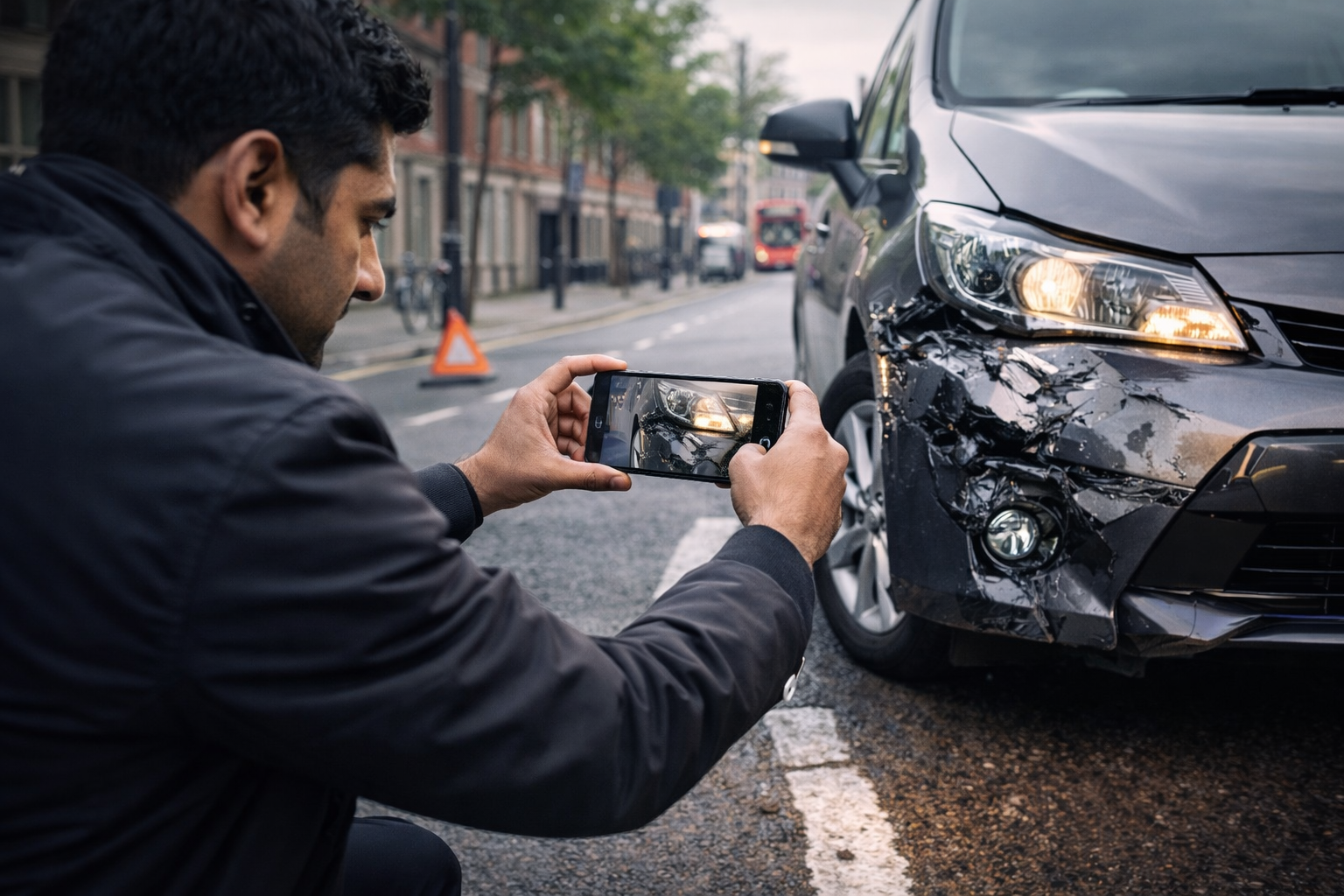
- Photograph positions, damage, road markings, and number plates.
- Take brief written notes before memory fades.
- Avoid roadside deals that erase your evidence trail.
The next trap is even more expensive, because it catches drivers who think any replacement vehicle is a solution.
Why Can the Wrong Replacement Still Leave You Off the Road?
Is any courtesy car good enough for PCO work?
No. A replacement that gets you home is not always a replacement that gets you working. For a PHV driver, the real question is whether the vehicle is properly usable for licensed private hire work.
This is one of the biggest misunderstandings in first-year private hire driving. After a crash, you hear “replacement vehicle” and assume the problem is solved. But a PHV driver needs more than temporary mobility. TfL requires any vehicle used for private hire work in London to be correctly licensed as a PHV. (Transport for London) A normal courtesy car may help a family driver get to the supermarket. It does not automatically help a licensed PHV driver keep taking bookings.
That distinction matters because downtime is not just inconvenience. It is business interruption. A driver who accepts the wrong vehicle may still be stuck off the app, off the road, and off income. That is why the calmest phrasing is also the most useful phrasing: do not ask only, “Can I drive this?” Ask, “Can I legally and practically work in this?”
Data layer
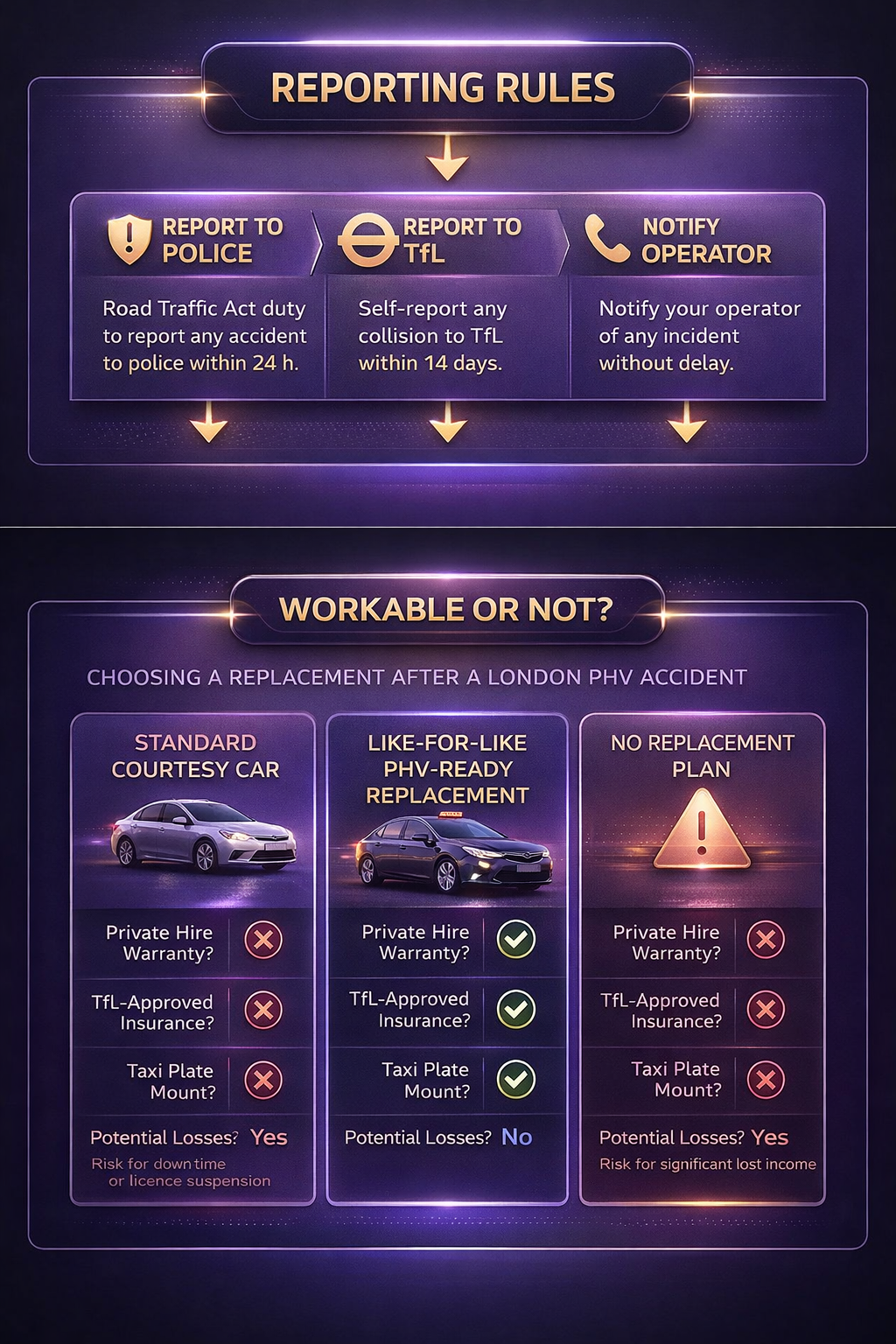
| Option | Helps you travel? | Helps you work? | Key issue |
|---|---|---|---|
| Standard courtesy car | Usually yes | Not automatically | May not be licensed/usable for PHV work |
| Like-for-like PHV-ready replacement | Yes | Potentially yes | Must match licensing and working requirements |
| No replacement plan | No | No | Highest downtime risk |
Once you understand that “replacement” is not the same as “working replacement,” the next priority is knowing what TfL, the police, your operator, and your insurer may expect from you.
What Do TfL, Police, and Insurers Expect Next?
Which reporting duties actually apply after a crash?
The safest approach is to separate your duties clearly: Road Traffic Act duties, TfL driver self-reporting duties, vehicle-damage reporting duties for owners, operator duties, and insurer duties are not the same thing.
This is where most mixed advice becomes confusing. Under the Road Traffic Act, the driver must stop, provide required details, and report the accident to the police if the legal conditions for reporting apply and details were not exchanged at the scene. (Legislation.gov.uk) TfL's current self-reporting page is different: it requires licensees to report arrests and releases, charges, cautions, and convictions within 48 hours. (Transport for London) Then there is the PHV vehicle rule: if you own your PHV, you must tell TfL within 72 hours of any collision that materially affects the safety, performance, appearance, or comfort of the vehicle. (Transport for London)
That does not mean every crash creates the same reporting sequence. It means you need to stop collapsing different rules into one vague idea of “I reported it.” New PCO drivers often do one thing and assume they have done everything.
Data layer
| Duty | Trigger | Timeframe | Source |
|---|---|---|---|
| Stop/exchange/report to police if required | Accident circumstances under section 170 | Immediate / within 24 hours where applicable | Road Traffic Act 1988 |
| TfL self-reporting | Arrest/release, charge, caution, conviction | Within 48 hours | TfL self-reporting page |
| TfL vehicle-damage reporting | Owned PHV materially affected by collision | Within 72 hours | TfL PHV handbook / PHV Act |
| Operator notification | Working-vehicle incident affecting service | As soon as possible | Practical operator compliance |
| Insurer notification | Policy-related accident reporting | Check policy wording | Policy dependent |
Once the rules are clear, the next question becomes practical: what evidence protects you best when the facts are later challenged?
What Evidence Protects a New PHV Driver Best?
Which details actually matter later?
Good evidence is practical, early, and difficult to misunderstand. You do not need a courtroom mindset. You need enough clear detail to show what happened, what changed, and why your working position was affected.
The strongest evidence usually starts with the basics: road position, damage points, registration numbers, road signs, road markings, weather, and witness details. If you have dashcam footage, secure it quickly so it is not overwritten. If you can make a short written note while the details are fresh, do it. A clear note is better than a vague memory two days later.
MIB's accident-related insurance-check route shows why accurate registration and incident details matter after the roadside moment has passed. (MIB) For PHV drivers, there is one more layer: note anything that affects usability for work, not just visible damage. A car can look drivable and still become a working problem.
Data layer
- Wide photos showing both vehicles and the road layout
- Close-up photos of all damage points
- Number plates and make/model details
- Witness names and contact details
- Dashcam file saved
- Time, place, weather, and lane-position note
- Short note on whether the vehicle remains suitable for work
Once you know what to collect, the most useful part of this guide is the simplest part: what to do in the first 30 minutes, in order.
What Should You Do in the First 30 Minutes?
Which steps help you stay calm and usable?
The first 30 minutes should be about safety, facts, and work-protecting decisions. If you slow the moment down and follow a short process, you reduce the chance of turning one accident into several separate problems.
Start with safety. Then exchange details properly. Then move into evidence. Only after that should you start discussing next-step logistics. A first-year PCO driver does not usually lose control because of the crash itself. The bigger risk is leaving the scene with weak evidence, unclear notes, and the wrong idea of what “sorted” looks like.
Data layer: The first 30-minute checklist
- Get safe and check passengers and other road users.
- Stop and exchange required details.
- Photograph the scene before positions change, if safe.
- Take a brief note of time, direction of travel, weather, and road layout.
- Save dashcam footage.
- Contact your operator or rental provider as soon as practical.
- Keep every message and reference number in one place.
- Think about PHV workability, not just whether the car can still move.
How Can You Protect Income Without Creating More Risk?
What is the smart way to think about downtime?
Protecting income is not about rushing back blindly. It is about making sure the next step actually fits licensed private hire work, keeps records clean, and does not create avoidable financial surprises later.
New drivers often feel trapped between two bad options: stop working with no plan, or accept the first offer that sounds fast. The better option is to ask sharper questions. Is the vehicle solution actually suitable for PHV work? Are the terms clear? Are you keeping a clean record? Are you treating insurer outcomes as guaranteed when they are not?
That balanced view matters. Accident Assist Network can help coordinate practical next steps after a non-fault accident, but its role is limited to vehicle-damage coordination, not personal injury handling, medical advice, or financial advice. That is why the right tone here is calm and transparent. “0 upfront cost” should always be read together with the contractual-risk wording in the disclaimer below.
💭 Reflection Prompt
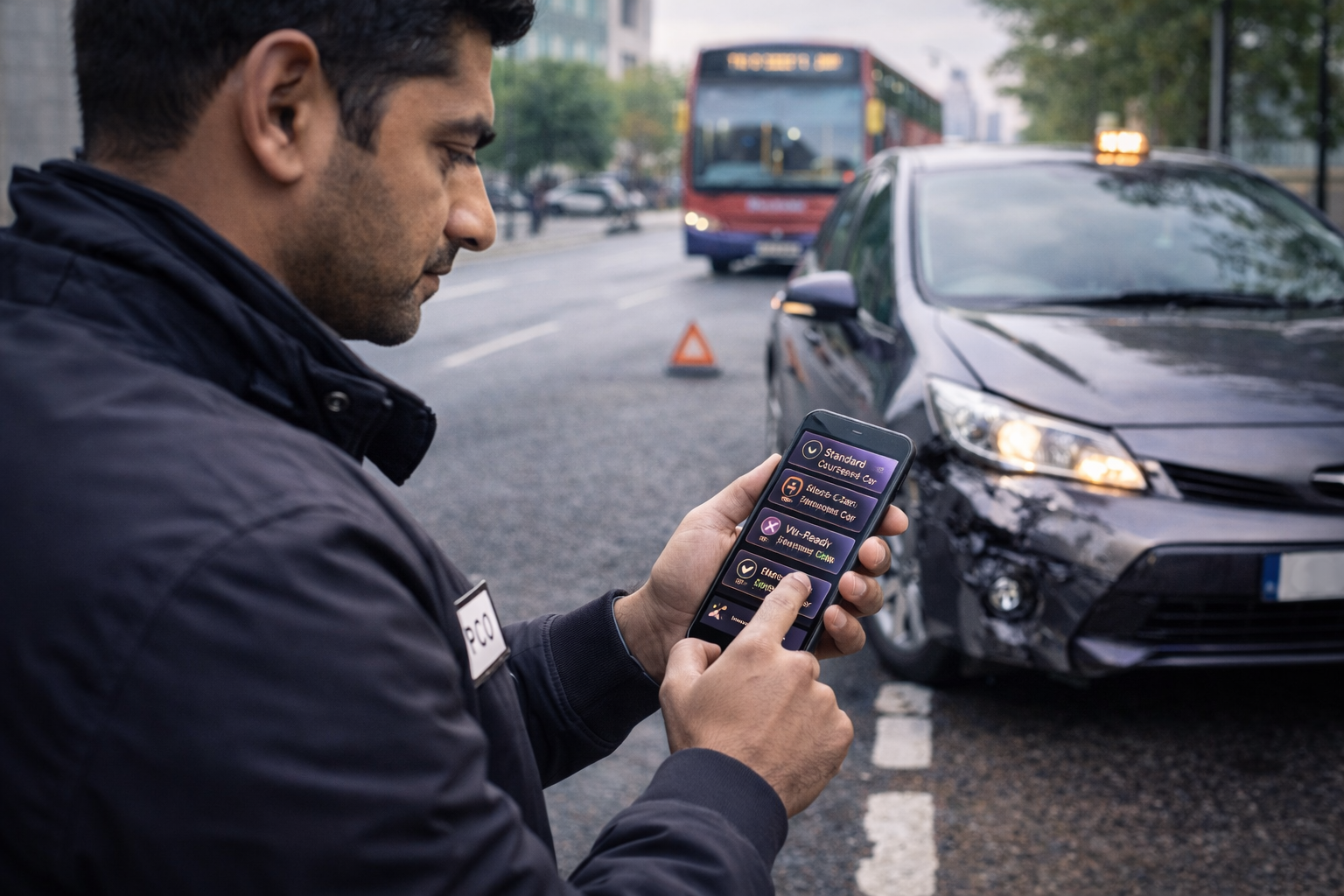
You are a first-year PCO driver. The damage looks minor, the other driver offers cash, and you still have bookings waiting. Which choice protects you best:
- A) take the cash and move on
- B) record everything first and decide later
- C) accept the first replacement offered
- D) stop, verify your options, and protect your working position
The safest route is usually B first, then D.
🎯 Your Next 3 Moves
Immediate: Save the basics — photos, number plates, witness details, and short written notes.
This session: Check whether your next transport option is actually usable for private hire work, not just personal travel.
This week: Keep your records organised and get practical guidance before agreeing to anything that affects repairs, recovery, or replacement arrangements.
Sources & References
- Source: TfL taxi and private hire information, including self-reporting guidance. (Transport for London)
- Source: TfL PHV Driver Handbook. (Transport for London)
- Source: Private Hire Vehicles (London) Act 1998. (Legislation.gov.uk)
- Source: Road Traffic Act 1988, section 170. (Legislation.gov.uk)
- Source: MIB accident-related insurance check guidance. (MIB)
Because Asking is the first step
I'm a newly licensed private hire driver and my car is off the road after a crash — can I get back to work without choosing the wrong replacement?
London PHV accident support options →
If you need practical help after a non-fault accident
Call 020 4577 1120 or WhatsApp 07585 300 600. You can also explore recovery, replacement vehicle support, or repairs guidance on Accident Assist Network.
Accident Assist Network assists you after a non-fault accident by co-ordinating vehicle recovery, reputable repairs, cash-in-lieu settlements for total-loss vehicles, and like-for-like replacement hire—whether for personal use, licensed taxi work or bike—through our network of independent specialist companies across England. Your one call and we sort it all.
Because our role is one of practical facilitation rather than financial advice, we are not authorised by the Financial Conduct Authority, and our services are not covered by the Financial Ombudsman Service or the Financial Services Compensation Scheme.
Our partner companies will always endeavour to help you recover costs from the at-fault insurer; however, if that insurer delays or disputes payment you may become liable for credit services or other charges set out in your contract. Each partner company will supply its own terms and conditions in agreements. Please read every document thoroughly and, if anything is unclear, ask us—or an independent adviser—before signing. We are happy to guide you in the language you feel most comfortable with.
Need practical help in England? Call 020 4577 1120 | WhatsApp 07585 300 600
Frequently Asked Questions
Do I have to tell TfL about every accident as a new PCO driver?
Can I use a normal courtesy car for Uber or Bolt work?
What if the other driver leaves the scene or I need insurance details later?
Should I accept cash at the roadside if the damage looks minor?
Will a non-fault accident automatically damage my no-claims bonus?
Do I need to report the crash to the police?
Because Asking is the first step
Will using Accident Assist Network affect my no-claims bonus or increase my insurance premiums?
Non-fault accident support →
Want a calm second opinion before you make your next move?
Call 020 4577 1120, WhatsApp 07585 300 600, or visit Accident Assist Network for practical post-accident guidance.
Raheel Ahmed Rathore
Writes for drivers who need practical, plain-English guidance after a non-fault accident, with a focus on recovery, replacement options, repairs, and realistic next steps across England.