London Taxi vs Uber: 5 Key Insurance Claim Differences [Driver Guide]
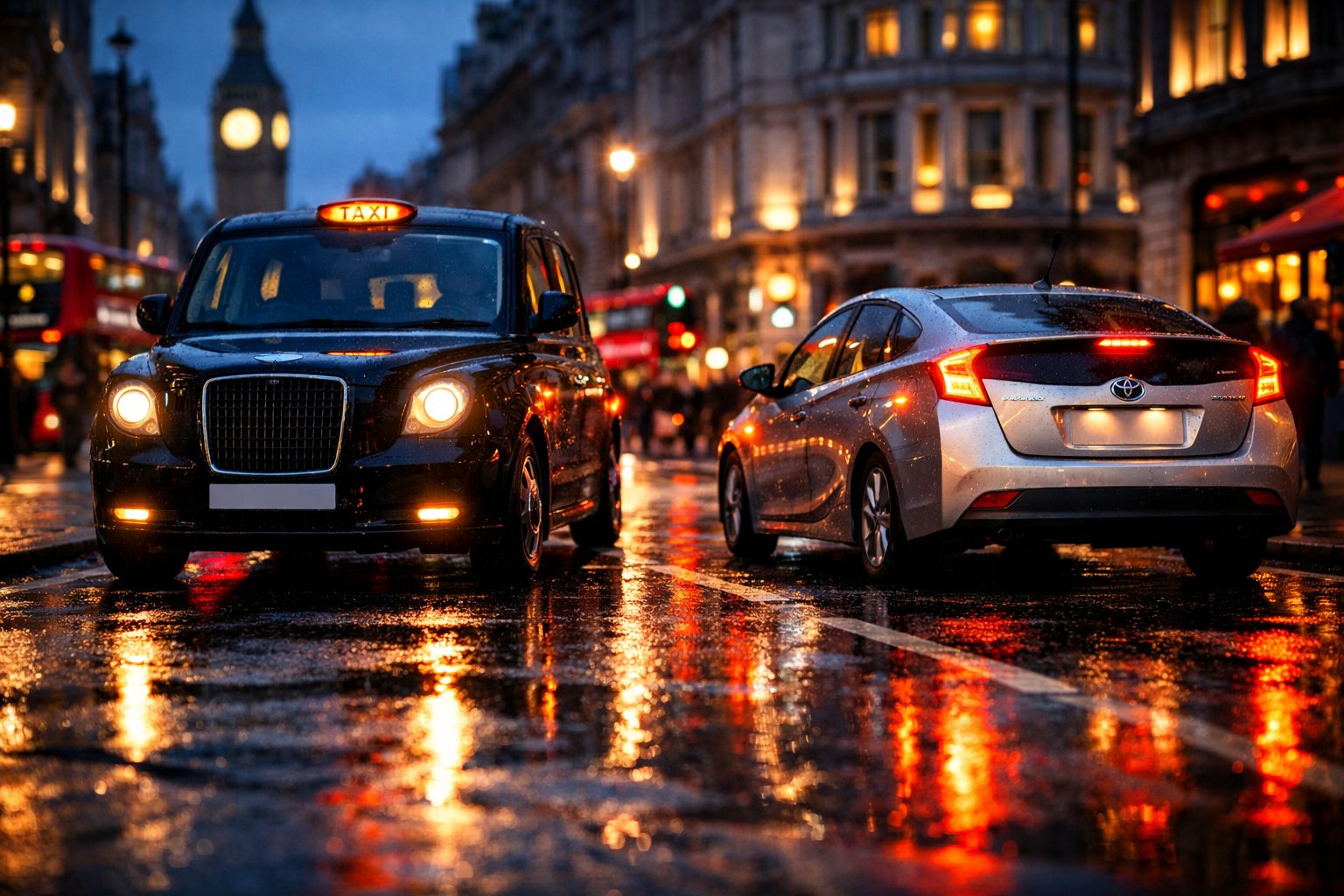
You are a professional driver in London. You have just been in a non-fault accident. Your vehicle is damaged, you are shaken, and as you stand by the side of the road, the immediate thought isn't just about the metal—it is about your livelihood. Every hour your taxi or PHV is off the road is money burning away. You are suddenly facing insurance jargon, wondering if your no-claims bonus is safe, and stressing about whether you can get a TfL-plated vehicle in time for tomorrow's shift.
It is overwhelming—especially when you are dealing with shock, aggressive at-fault insurers, and the looming fear of complex daily costs. This guide walks you through the exact steps to take in the first 24 hours, highlighting the critical differences between Black Cab and PHV claims, protecting your income, and minimising stress.
Let's start with the one thing most professional drivers get wrong after a crash—and how to avoid it.
Stressed after an accident? Call 020 4577 1120 for 24/7 help. WhatsApp easier? Text 07585 300 600. We speak English, Romanian, Urdu, Tamil, and Hindi.
🎬 Watch video guide about London Taxi vs Uber Claims
Short on time? Watch our video summary covering everything you need to know about London Taxi and Uber claims—from policy differences to securing a compliant replacement vehicle.
Quick Answer: What is the main difference between a London taxi and Uber insurance claim?
If you have been in a non-fault accident, the primary difference lies in vehicle replacement and policy type. London black cabs (Hackney Carriages) require purpose-built, highly specific replacements (like a LEVC TX) under Public Hire policies, while Uber/PHVs require standard TfL-plated vehicles under Private Hire Reward policies. For both, accepting a standard non-plated courtesy car from a standard insurer means you cannot legally work, resulting in immediate loss of earnings. You have the right to a like-for-like replacement.
Table of Contents
The Real Cost Of Vehicle Downtime
Why does a non-fault accident cost professional London drivers so much?
A non-fault accident costs professional drivers heavily because standard insurers often supply non-plated courtesy cars. Without a TfL-plated, like-for-like replacement vehicle, you are legally prohibited from picking up passengers, resulting in a 100% loss of daily earnings while your vehicle undergoes repairs.
When you drive for a living in London, a vehicle is not a luxury; it is your sole source of income. Imagine David, an Uber driver working in Zone 1. He is rear-ended at a traffic light. He calls his standard insurance provider, who quickly arranges a courtesy car. The problem? It is a standard hatchback without a Private Hire Vehicle (PHV) plate. David is back on the road, but he is legally barred from opening his Uber app. His daily income drops to zero, despite the accident not being his fault.
This scenario plays out across the capital daily. Many private hire drivers on consumer forums report immense frustration when their own insurer provides a standard, non-plated courtesy car, leaving them unable to earn while repairs drag on. The distinction between personal transportation and commercial operational readiness is the largest hurdle in professional motor claims. Your primary goal is to maintain business continuity, which requires an immediate, compliant replacement vehicle, not just "a car."
Daily Income Loss Estimates for London Drivers:
- Uber/PHV Driver (Full Time): £120 - £180 lost per day
- London Black Cab (Hackney): £150 - £250 lost per day
- Executive Chauffeur (PCO): £200+ lost per day
Skip the correct replacement step, and your claim timeline—and income loss—can extend by weeks. Here is why the policy type matters. →
People Also Ask
Because Asking is the First Step
How can Accident Assist Network help after a non-fault accident?
After a non-fault accident, Accident Assist Network helps drivers by coordinating vehicle recovery, repairs, and replacement vehicles so they can return to work quickly. Their network handles communication with the at-fault insurer while arranging professional repairs and secure storage. Learn more about their services for vehicle repairs and accident claim support here:
Click here to learn about our vehicle repairs
Check here for non-fault accident claim support
Difference 1: Commercial Policies Explained
What is the difference between Public Hire and Private Hire insurance?
Black cabs require Public Hire insurance, allowing them to legally pick up unbooked passengers hailing them on the street. Uber and PHV drivers require Private Hire (Hire and Reward) insurance, covering them only for pre-booked journeys dispatched via an operator.
Understanding your specific commercial policy is critical when establishing liability and initiating a non-fault accident claim. London taxi drivers (Hackney Carriages) operate under Public Hire insurance. This specialized, often highly expensive policy covers the unique risks of street-hailing and rank operations. Because black cabs are purpose-built vehicles (like the LEVC TX or Mercedes Vito), the insurance also factors in the high cost of specialist parts and repairs.
Conversely, Uber and other Private Hire Vehicle (PHV) drivers utilize Private Hire (Hire and Reward) insurance. This covers the driver and passengers for pre-booked trips only. During a non-fault claim, the at-fault driver's insurance must recognize the specific commercial nature of your vehicle. If a PHV is written off, the settlement must reflect the market value of a plated, compliant vehicle, not just a standard domestic car. One Uber driver on Reddit's r/LegalAdviceUK shared: "My insurer gave me a standard hatchback after my non-fault crash. I lost 12 days of earnings before finding a plated replacement."
| Feature | London Black Cab (Hackney) | Uber / PHV |
|---|---|---|
| Policy Type | Public Hire Insurance | Private Hire (Hire & Reward) |
| Passenger Pickup | Street hails, ranks, and pre-booked | Pre-booked through an operator ONLY |
| Vehicle Type | Purpose-built, TfL Conditions of Fitness | Standard vehicles meeting TfL criteria |
| Replacement Need | Purpose-built Hackney Carriage | TfL-Plated Private Hire Vehicle |
Now that you understand the insurance definitions, let's look at the hardest part of any commercial claim: finding the right temporary vehicle. →

Difference 2: Plated Replacement Vehicles
How do I get a TfL-plated replacement vehicle after a crash?
To get a TfL-plated replacement vehicle, you should use an accident management service that coordinates commercial credit hire. They will provide a like-for-like replacement (Hackney for Hackney, PHV for PHV) with £0 upfront cost, recovering the hire charges directly from the at-fault driver's insurance.
The logistics of replacing a commercial vehicle in London are heavily regulated. For a Black Cab driver, you cannot simply rent a standard sedan; you require a vehicle that meets TfL's strict Conditions of Fitness, complete with a meter, wheelchair accessibility, and a valid Hackney Carriage plate. Sourcing a temporary LEVC TX or Vito taxi is incredibly difficult through standard domestic insurers, who frequently lack access to commercial fleet networks.
For PHV drivers, the vehicle must hold a valid PCO (Public Carriage Office) licence. The TfL PHV guidelines (Source: Transport for London) strictly prohibit undertaking booked work in an unlicensed vehicle. Accident Assist Network coordinates this exact process. By stepping in immediately after a non-fault accident, we facilitate the delivery of a like-for-like, fully compliant replacement vehicle—often within 24 hours. This process, known as credit hire, involves £0 upfront costs for you; the fees are deducted post-settlement by recovering them from the at-fault party's insurer.
Like-For-Like Replacement Requirements:
- Verification: Confirming your non-fault status and current TfL licensing.
- Matching: Sourcing a vehicle that matches your specific operational tier (e.g., standard PHV, Executive, or Hackney).
- Delivery: Coordinating the delivery of the plated vehicle so you can log back into your operator app or return to the rank.
- Recovery: The partner network manages the recovery of your damaged vehicle to a secure storage facility.
Without this compliant replacement, you could be liable for business costs with no way to earn. Let's prevent that by looking at your passengers. →
Ready to get your life back? Call 020 4577 1120 now for immediate recovery & replacement hire coordination. Or WhatsApp 07585 300 600 if that’s easier. £0 upfront cost.
People Also Ask
Because Asking is the First Step
Does Accident Assist Network provide replacement vehicles for drivers?
Yes. If your vehicle is damaged in a non-fault accident, Accident Assist Network can arrange a like-for-like replacement vehicle so you can continue working while repairs are completed. This is especially important for London taxi and private hire drivers who require TfL-compliant vehicles to operate legally. Learn more about their replacement vehicle service here:
Click here to explore replacement vehicle options
Check here for specific London taxi driver support
Difference 3: Passenger Liability & Rights
Who is liable for a passenger in a taxi accident?
In a non-fault accident, the at-fault driver's insurance is ultimately liable for any passenger injuries or trauma, regardless of whether they are in a Black Cab or an Uber. Your commercial insurance protects the passenger initially, but liability rests with the party who caused the crash.
When carrying the public, the stakes of an accident multiply. If you are rear-ended while carrying a passenger, the situation requires calm, methodical action. In both Hackney Carriages and PHVs, your primary responsibility is safety. Check on your passenger immediately. Because your vehicle is operating under commercial insurance (Public or Private Hire), your passengers are fully covered. However, because the accident was not your fault, the financial liability for the vehicle damage and any passenger claims falls squarely on the at-fault driver.
It is crucial to document everything at the scene. If the at-fault driver is uninsured, the Motor Insurers' Bureau (MIB) (Source: MIB) acts as the safety net for compensation in the UK. Ensure you exchange details, take photos of both vehicles, capture the road conditions, and ideally, secure the contact information of your passenger as an independent witness. Do not engage in arguments with the at-fault driver regarding passenger liability; simply gather the facts.
Immediate Scene Checklist for Passenger Drivers:
- Ensure the safety of yourself and your passengers.
- Call emergency services if there are any injuries or if the road is blocked.
- Do NOT admit liability or apologize for the crash.
- Take photos of the vehicles, license plates, and the passenger's seating area.
- Collect the at-fault driver's name, phone number, and insurance details.
Now that the immediate scene is handled, you face strict deadlines for reporting the incident to the authorities. →
Difference 4: Insurer vs TfL Timelines
When must I report an accident to Transport for London?
Under TfL regulations, licensed London taxi and PHV drivers must report any accident that materially affects the safety, performance, or appearance of their licensed vehicle to TfL within 72 hours. This is in addition to reporting the incident to your insurance provider.
The administrative burden following a non-fault accident is a major source of stress for professional drivers. Unlike domestic drivers who only need to notify their insurer, London taxi and PHV drivers have dual reporting obligations. According to TfL regulations, if your vehicle suffers damage that impacts its compliance with licensing standards—such as significant bodywork damage, broken lights, or mechanical failure—you must inform TfL within 72 hours. Failing to do so can result in disciplinary action against your licence.
Simultaneously, you must notify your insurance provider. However, notifying your insurer does not mean you are obligated to use their claims management team or accept their non-plated courtesy car. You have the legal right to use an independent accident coordination service like Accident Assist Network to manage the recovery, repairs, and like-for-like replacement hire. We help streamline this reporting phase, providing the documentation you need to demonstrate to your operator (like Uber) and TfL that the situation is being handled by reputable repair networks.
Difference 5: Loss of Earnings Recovery
Can a taxi driver claim loss of earnings after a non-fault accident?
Yes. If you are involved in a non-fault accident, you have the legal right to claim for "loss of earnings" for the time you were unable to work due to vehicle downtime. This claim is made against the at-fault driver's insurance policy.
Protecting your income is the core reason Accident Assist Network exists. When a negligent driver takes your vehicle off the road, they are legally responsible for your resulting financial losses. This concept, rooted in UK tort law, means you should be restored to the financial position you were in before the accident. For a courier or taxi driver, this includes the daily wages lost while waiting for a recovery truck or sourcing a compliant replacement vehicle.
To successfully claim loss of earnings, you must provide clear evidence. This typically requires providing your last 3 to 6 months of accounting records, tax returns, or app-based earnings statements (such as Uber driver summaries or Zettle/SumUp receipts from a black cab). The at-fault insurer will calculate a daily average and reimburse you for the verified days you were off the road. By coordinating a like-for-like replacement vehicle within 24 hours, AAN drastically minimizes this downtime, keeping your earnings flowing while our partner network handles the complex subrogation (cost recovery) from the at-fault party.
Documents Needed to Prove Loss of Earnings:
- Bank statements showing regular income deposits.
- Operator statements (Uber, Bolt, Addison Lee weekly summaries).
- HMRC tax returns from the previous year.
- Proof of fixed daily costs (insurance, radio rent) that continued during downtime.
With your income protected and the paperwork clear, here is exactly how we step in to handle the physical vehicle. →

People Also Ask
Because Asking is the First Step
How does Accident Assist Network handle accident recovery and storage?
When a vehicle cannot be driven after a crash, Accident Assist Network coordinates roadside recovery and secure storage through its partner network. This ensures the damaged vehicle is safely transported to an approved facility while repairs and insurance processes are arranged. Drivers can see how the recovery process works here:
Click here to see how our recovery process works
Check here to contact our 24/7 support team
How To Stay On The Road (The AAN Solution)
What should I do if my taxi is written off in an accident?
If your commercial vehicle is a total loss (written off) after a non-fault accident, contact a coordination service to arrange immediate vehicle recovery and a plated replacement hire. You can also opt for a cash-in-lieu settlement to replace the vehicle yourself, ensuring £0 upfront costs.
Accident Assist Network is built around a friend-first approach to a highly stressful industry. We understand that as a Romanian driver navigating London, or a local black cab veteran, you don't want corporate runarounds; you want answers in plain English and a fast solution. Our unregulated, practical facilitation service focuses exclusively on vehicle damage coordination. We do not handle personal injury, nor do we offer financial advice. We exist to sort the metal so you can sort your life.
When you call us, we provide a free case assessment. If you are involved in a non-fault accident, we leverage a network of independent specialist companies to arrange vehicle recovery from the roadside. We coordinate manufacturer-standard repairs through reputable garages or facilitate cash-in-lieu settlements if your vehicle is a total loss. Most importantly, we arrange the delivery of a like-for-like, TfL-plated replacement vehicle, often within 24 hours. There is £0 upfront cost to you; all fees are deducted post-settlement from the at-fault insurer.
The AAN Coordination Steps:
- One Call: You contact our 24/7 hotline.
- Assessment: We verify liability and vehicle needs (in 5 languages).
- Recovery: A tow truck secures your damaged vehicle.
- Replacement: A plated Hackney or PHV is delivered to you.
- Resolution: Repairs are completed, or total loss cash is negotiated.
Interactive Scenario: What Would You Do?
Imagine you are driving a TfL-plated Toyota Prius for Uber. You are rear-ended while parked safely. The other driver admits fault. You call your domestic insurer, and they tell you they can drop off a standard Ford Fiesta in three hours.
What is your next move?
- Option A: Accept the Fiesta, knowing you cannot use it for Uber, and lose a week of wages.
- Option B: Decline the Fiesta, source a daily PCO rental out of your own pocket, and hope the at-fault insurer reimburses you months later.
- Option C: Call an accident coordination network to force the at-fault insurer to provide a legally compliant, like-for-like PCO vehicle at £0 upfront cost.
(Consider how quickly Option C protects your income and your TfL compliance. If you face this scenario, you know who to call).
Conclusion
Navigating a non-fault accident in London is vastly different for a professional driver than for a standard motorist. Whether you are behind the wheel of a traditional Hackney Carriage or operating a Private Hire Vehicle, the core threat is the same: vehicle downtime equals income loss. By understanding the differences in commercial insurance, prioritizing a TfL-plated like-for-like replacement, and maintaining strict reporting timelines, you protect your livelihood.
Accident Assist Network is your trustworthy friend in these moments. We coordinate the recovery, the repairs, and the compliant replacement hire without charging you a penny upfront. You don't have to fight the insurers alone, and you shouldn't have to accept a vehicle that stops you from working. Protect your income, protect your no-claims bonus, and let us sort the rest.
Call a Trustworthy Friend
We're here 24/7 to walk you through every step. Your no-claims bonus is protected.
Visit www.accidentassistnetwork.co.ukAccident Assist Network assists you after a non-fault accident by co-ordinating vehicle recovery, reputable repairs, cash-in-lieu settlements for total-loss vehicles, and like-for-like replacement hire—whether for personal use, licensed taxi work or bike—through our network of independent specialist companies across England. Your one call and we sort it all.
Because our role is one of practical facilitation rather than financial advice, we are not authorised by the Financial Conduct Authority, and our services are not covered by the Financial Ombudsman Service or the Financial Services Compensation Scheme.
Our partner companies will always endeavour to help you recover costs from the at-fault insurer; however, if that insurer delays or disputes payment you may become liable for credit services or other charges set out in your contract. Each partner company will supply its own terms and conditions in agreements. Please read every document thoroughly and, if anything is unclear, ask us—or an independent adviser—before signing. We are happy to guide you in the language you feel most comfortable with.
Need practical help in England? Call 020 4577 1120 | WhatsApp 07585 300 600
Sources and References
- Transport for London (TfL) - Private Hire Vehicle Licensing Guidance (Source: TfL)
- Motor Insurers' Bureau - Making a Claim against Uninsured Drivers (Source: MIB)
- GOV.UK - Reporting an accident to the police (Source: GOV.UK)
- Association of British Insurers - Motor Insurance Claims Data (Source: ABI)
Frequently Asked Questions
Will a non-fault claim increase my taxi insurance premium?
In a purely non-fault accident where all costs are successfully recovered from the at-fault driver's insurer, your no-claims bonus should remain intact. However, you must declare the accident to your insurer at renewal. Some commercial insurers may still marginally increase base premiums based on perceived risk algorithms.
What happens if the at-fault driver's insurer refuses to pay the hire charges?
If the at-fault insurer delays or disputes the payment for your replacement hire, you may technically become liable for the credit services as outlined in your hire contract. This is why our partners rigorously verify liability before providing a vehicle, minimising this risk. Always read your agreement carefully. Our team coordinates replacement vehicles across England — call us on 020 4577 1120.