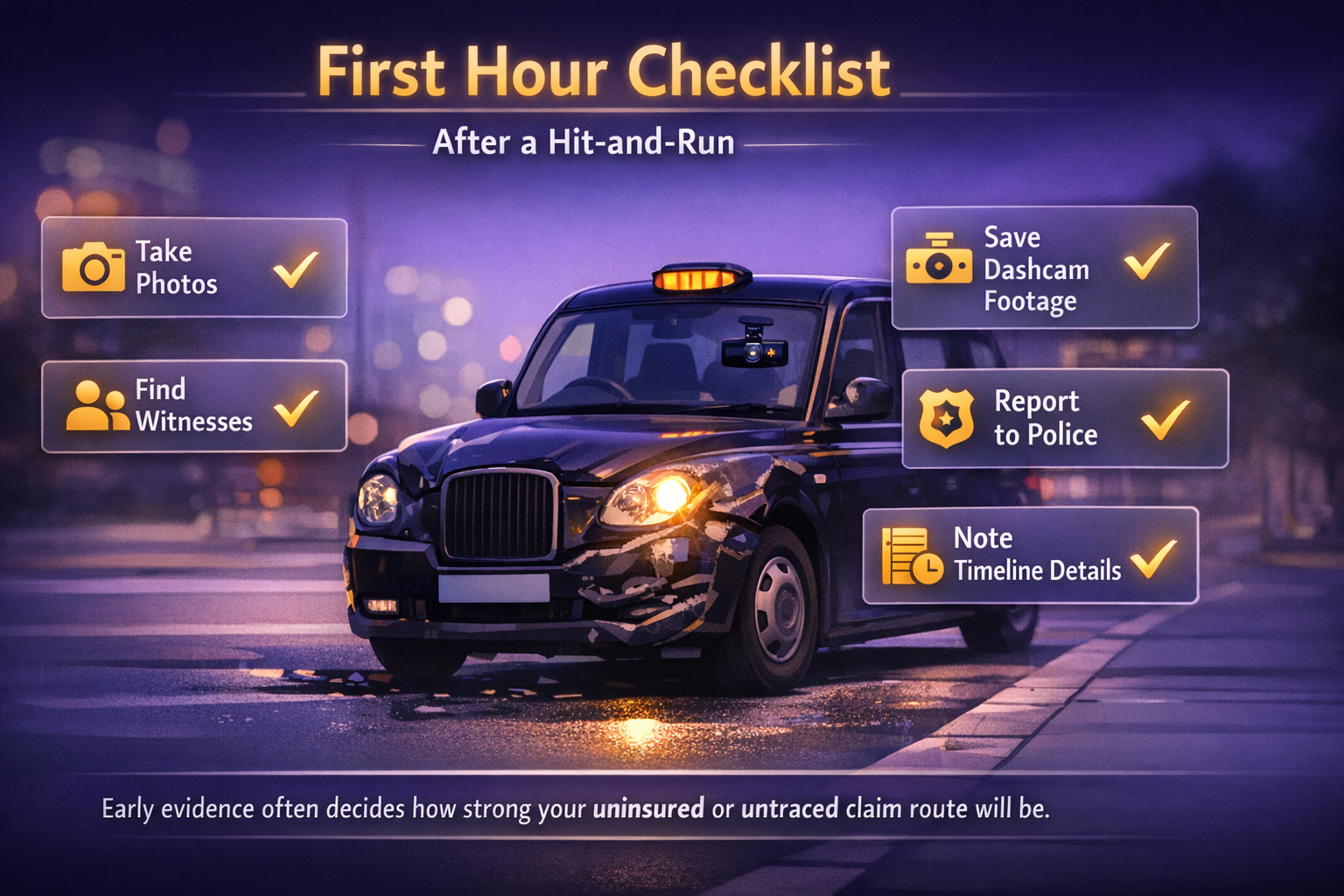

Courtesy Car vs Credit Hire: Why Taxi Drivers Should Refuse Insurer Offers
The Trap Thousands of Taxi Drivers Fall Into. You've been rear-ended at a rank. Your taxi is undriveable. Within 48 hours, the at-fault driver's insurer calls with "good news"—they'll provide you with a courtesy car. But is it the right choice for your business?
Quick Answer: Can Taxi Drivers Refuse Courtesy Cars?
Yes. UK taxi drivers involved in non-fault accidents are legally entitled to refuse courtesy cars that are not suitable for their work. Under credit hire principles established in Lagden v O'Connor (2003), you're entitled to a like-for-like replacement vehicle that allows you to maintain your pre-accident standard of living—which for taxi drivers means a TfL-plated or PCO-compliant vehicle.
Refusing an unsuitable courtesy car does not invalidate your claim or affect your no-claims bonus. The at-fault insurer remains liable for the reasonable cost of a replacement that actually allows you to work. You can arrange a plated replacement through specialist accident management providers, with costs recovered from the at-fault insurer on a credit basis.
Courtesy Car vs Credit Hire
Why Taxi Drivers Should Refuse Insurer Offers
⚠️ The Trap: Why Courtesy Cars Fail
Insurers provide basic "Class A" vehicles like Ford Focus or Vauxhall Corsa. While reliable, these cars are completely unplated.
⚖️ Your Legal Rights
- ✅ Lagden v O'Connor (2003): Entitled to like-for-like replacement.
- ✅ Income Protection: Right to maintain pre-accident standard of living.
- ✅ Right to Refuse: You can reject unsuitable insurer offers.
- ✅ No Claims Impact: Refusing does not invalidate your claim.
Courtesy Car vs. Credit Hire
| Feature | Insurer Courtesy Car | Credit Hire (Our Solution) |
|---|---|---|
| Vehicle Type | Standard Car (Unplated) | Taxi-Plated / PCO Licensed |
| Legal to Work? | ||
| Income Impact | Lose £80-£120 / day | Maintain Full Income |
| Upfront Cost | £0 | £0 (Credit Basis) |
| Delivery Speed | 24-48 Hours |
🚀 How to Get a Plated Replacement (24 Hrs)
Don't wait for the insurer. Call Accident Assist Network immediately.
License, vehicle registration, and proof of non-fault.
Verify TfL/PCO status and ULEZ compliance.
Vehicle delivered ready for work (full tank/charged).
Accept bookings immediately.
Support & FAQ
Will I lose my No-Claims Bonus?
No. Refusing an unsuitable courtesy car does not invalidate your claim or affect your no-claims bonus. The at-fault insurer remains liable.
Who pays for the Credit Hire?
The at-fault driver's insurer pays. You pay £0 upfront. Costs are recovered post-settlement.
Do I need my own insurance?
No. The credit hire provider arranges hire insurance as part of the service ("Hire and Reward").
English, Romanian, Urdu, Tamil, Hindi
📞 020 4577 1120
💬 WhatsApp 07585 300 600
IMPORTANT LEGAL NOTICE: Accident Assist Network assists you after a non-fault accident by co-ordinating vehicle recovery... through our network of independent specialist companies. We are not authorised by the Financial Conduct Authority. Our partner companies will endeavour to help you recover costs from the at-fault insurer; however, if that insurer delays or disputes payment you may become liable for credit services. Please read every document thoroughly.
© 2026 Accident Assist Network. All rights reserved.
You feel relieved. Until you see the replacement: a basic Ford Focus or Vauxhall Corsa. Clean. Reliable. Completely unplated.
You can't legally accept fares. You can't respond to app bookings. You can't pick up passengers from Heathrow. For the next three weeks while your taxi sits in a repair shop, you're losing £80 to £120 every single day you could have been earning. That's between £1,680 and £2,520 gone—because the "free" courtesy car the insurer offered wasn't suitable for taxi work.
But here's what most taxi drivers don't know: you have the legal right to refuse that unsuitable courtesy car and request a like-for-like plated replacement instead. This is called credit hire, and it's protected under UK Tort law. In this guide, I'll show you exactly why courtesy cars don't work for professional drivers, what your legal entitlements are, and how to get a plated replacement within 24 hours at £0 upfront cost.
Table of Contents
Why Courtesy Cars Don't Work for Taxi Drivers
What Courtesy Cars Actually Are
Courtesy cars are temporary replacement vehicles provided by insurers or repair garages while your vehicle is being fixed. For most family drivers, they're perfectly adequate—a Vauxhall Corsa handles the school run, shopping trips, and commuting just fine.
But insurers provide courtesy cars to fulfill a basic obligation to all drivers, not to match your vehicle's specific licensing or professional requirements. They're standard personal cars, typically small hatchbacks, chosen because they're economical to provide.
The Licensing Trap
Here's the problem that makes courtesy cars useless for taxi drivers:
Courtesy cars are never TfL-plated or PCO-licensed. They're private vehicles. Under UK licensing law, you cannot legally ply for hire, accept app bookings, or pick up fares in an unplated vehicle—even if you're a licensed taxi driver with valid insurance.
Transport for London (TfL) requires all London taxis to meet strict design standards, have a calibrated taximeter, display hire insurance ("hire and reward" or "public hire"), and carry valid taxi plates. A standard courtesy car meets none of these requirements.
The result? You're off the road. Legally. Completely. Until your taxi is repaired.
The Income Loss Calculator
Let's quantify what this trap actually costs you:
| Scenario | Daily Income Lost | Repair Duration | Total Income Lost |
|---|---|---|---|
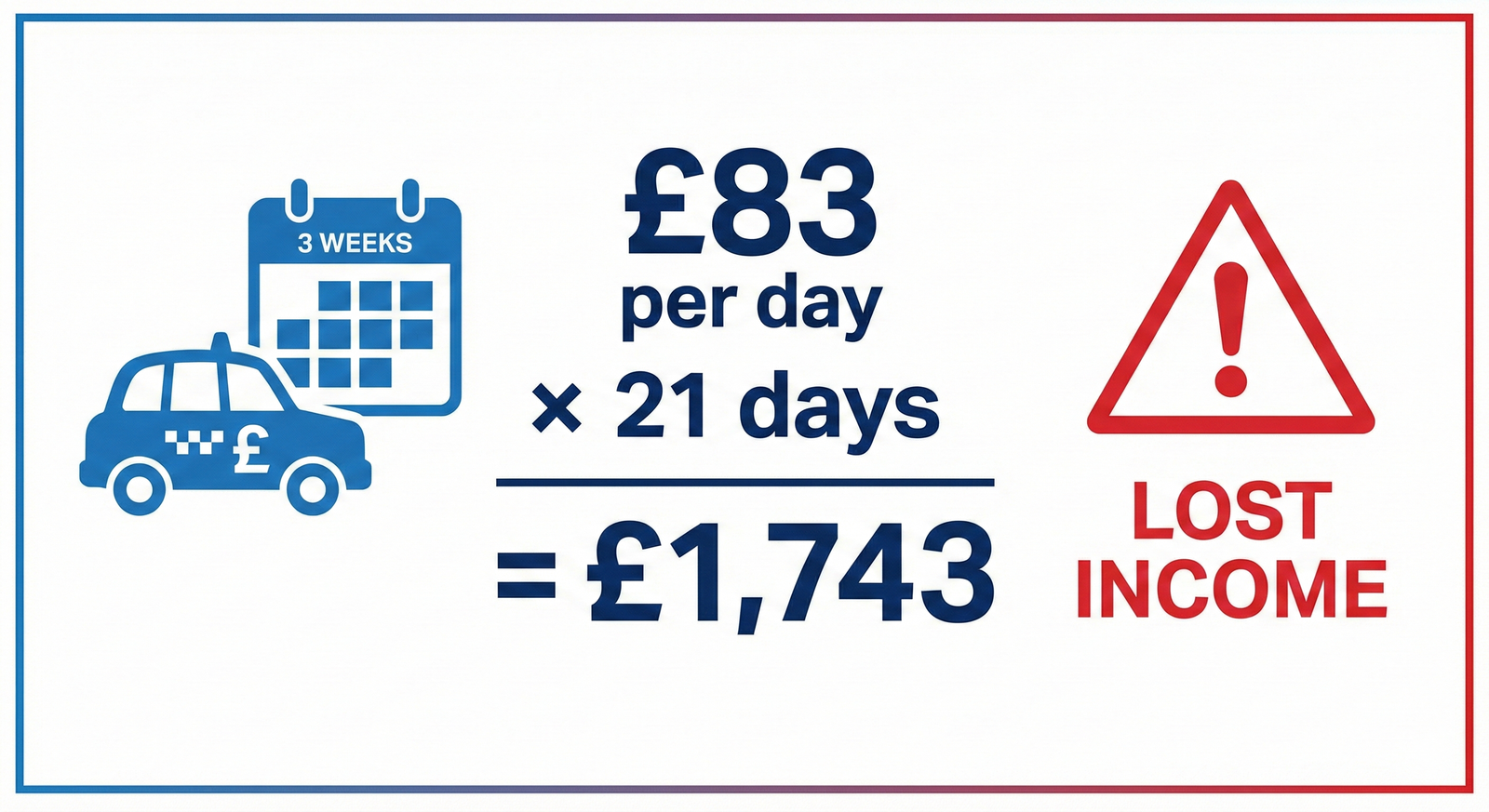
| Average UK taxi driver | £83/day | 21 days | £1,743 |
| London taxi driver (busy rank) | £120/day | 21 days | £2,520 |
| Part-time PHV driver | £60/day | 14 days | £840 |
These figures are based on the UK average taxi driver salary of £24,000 per year (£415 per week), translating to approximately £83 per working day. London Black Cab drivers at busy ranks like Heathrow often earn significantly more.
Three weeks off the road because of an unsuitable courtesy car can cost you between £840 and £2,520 in lost income. That's more than most drivers earn in a month—gone, because the insurer offered you a vehicle you can't legally use.
Your Legal Right to Refuse an Unsuitable Courtesy Car
UK Tort Law and Like-for-Like Entitlement
When you're involved in a non-fault accident, UK Tort law gives you the right to claim for any loss incurred as a result of the negligent party's actions.
In the landmark case Lagden v O'Connor (2003), the House of Lords ruled that claimants who rely on their vehicle for essential daily activities—including work—are entitled to a like-for-like replacement vehicle, even if it costs more than a basic courtesy car. The replacement must allow you to maintain your pre-accident standard of living, not just provide the cheapest option.
For taxi drivers, "like-for-like" means:
- Hackney Carriage → Hackney Carriage (TfL-plated)
- Private Hire → Private Hire (PCO-licensed)
- ULEZ-compliant EV → ULEZ-compliant EV
- Same passenger capacity (4-seater, 6-seater, wheelchair-accessible)
What "Unsuitable" Means
A replacement vehicle is unsuitable if it cannot fulfill your reasonable transport needs. For taxi drivers, reasonable transport needs include:
- Earning your livelihood (not just personal travel)
- Legal compliance (TfL licensing, insurance "hire and reward" cover)
- Maintaining pre-accident income (same earning capacity)
A Vauxhall Corsa courtesy car meets none of these needs for a taxi driver. It's legally unsuitable.
Refusing Won't Affect Your Claim
You will not lose your claim if you refuse an unsuitable courtesy car. The at-fault insurer remains liable for:
- Your vehicle repairs (or cash-in-lieu if written off)
- The reasonable cost of a suitable replacement vehicle
- Any other losses caused by the accident (storage, recovery, loss of use)
Insurers may pressure you to accept their courtesy car—often because it's cheaper for them than paying for credit hire. But your legal entitlement to a suitable replacement is protected by case law. You don't have to accept a vehicle that leaves you unable to work.
Credit Hire Explained: Like-for-Like Plated Replacements
What Is Credit Hire?
Credit hire is a specialist service where an accident management company provides you with a suitable replacement vehicle on credit—meaning you pay nothing upfront. The cost is then recovered directly from the at-fault driver's insurer.
Here's how it works:
- You contact a credit hire provider immediately after your non-fault accident
- They assess your vehicle type and licensing requirements
- They provide a like-for-like replacement (for taxi drivers, this means a TfL-plated or PCO-licensed vehicle)
- You use the replacement while your vehicle is being repaired
- The provider invoices the at-fault insurer for the hire costs
- Once the claim settles, the credit hire fee is deducted from the settlement amount
Who Pays for Credit Hire?
The at-fault driver's insurer pays for credit hire costs. You have £0 upfront cost. The accident management provider arranges everything on a credit basis and recovers the fees post-settlement.
However—and this is important for transparency—if the at-fault insurer successfully disputes the claim (for example, if they argue liability was shared), you may become liable for the hire costs. This is uncommon in clear-cut non-fault cases, but you must read and understand the credit hire agreement before signing.
Like-for-Like Principle for Taxi Drivers
For taxi drivers, like-for-like means:
- Vehicle licensing: TfL-plated (Hackney Carriage) or PCO-licensed (Private Hire)
- Insurance compliance: "Hire and reward" or "public hire" insurance displayed
- ULEZ compliance: If your vehicle is ULEZ-compliant, replacement must be too
- Passenger capacity: Same seating (4, 6, or wheelchair-accessible)
- Vehicle standard: Similar quality (electric → electric, hybrid → hybrid, executive → executive)
This ensures you can return to work immediately and maintain your pre-accident income.
Courtesy Car vs Credit Hire: Quick Comparison
| Factor | Courtesy Car (Insurer) | Credit Hire (Like-for-Like Plated) |
|---|---|---|
| Vehicle Type | Standard car (unplated) | Taxi-plated or PCO-licensed |
| Legal to Work With | ❌ No | ✅ Yes |
| Income Protection | ❌ None (you lose £80-120/day) | ✅ Full (back earning immediately) |
| Upfront Cost | ✅ £0 | ✅ £0 (credit arrangement) |
| Duration Limit | Often 14-21 days max | As long as repairs take (reasonable period) |
| Who Pays | Your insurer (or at-fault) | At-fault insurer (via credit hire recovery) |
| Delivery Speed | 24-48 hours | 24 hours (specialist providers) |
| TfL/PCO Compliance | ❌ No | ✅ Yes |
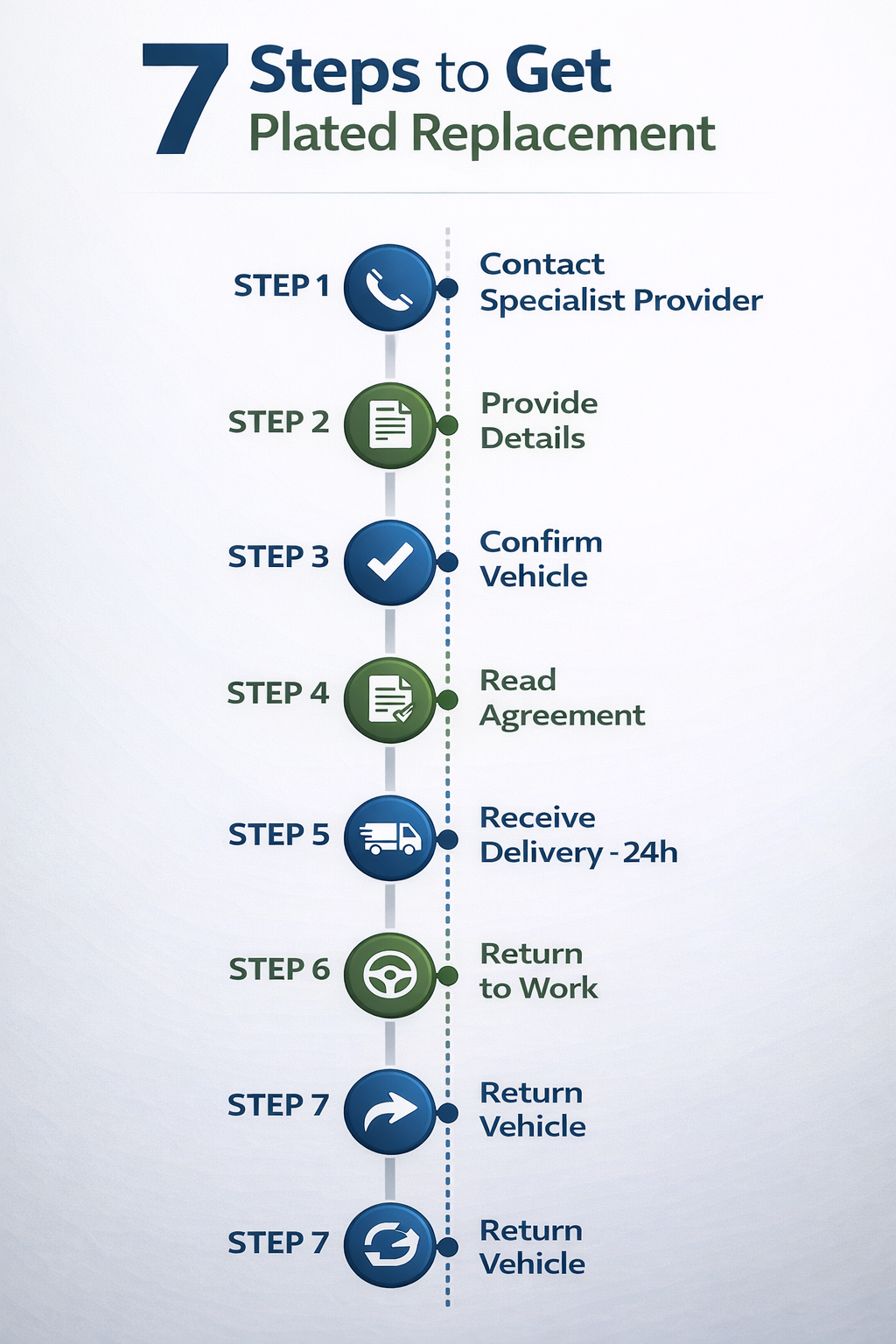
How to Get a Plated Replacement in 24 Hours
If you've been involved in a non-fault accident and need a plated replacement immediately, follow these steps:
Step 1: Contact a Specialist Provider Immediately
Don't wait for the insurer's courtesy car offer. Contact a specialist accident management company that provides taxi-plated hire within hours of the accident. The faster you act, the less income you lose.
Step 2: Provide Accident Details and Licensing
You'll need:
- Your TfL taxi driver license or PCO license
- Details of the accident (date, location, other driver's insurance details)
- Your vehicle registration and damage assessment
- Proof you were not at fault (police report, dashcam footage, witness statements if available)
Step 3: Confirm Like-for-Like Vehicle Availability
Ask the provider:
- Is the replacement TfL-plated or PCO-licensed?
- Is it ULEZ-compliant (if required for your work)?
- Does it have the same passenger capacity as your vehicle?
- When can it be delivered?
Step 4: Read the Credit Hire Agreement Carefully
Before signing, understand:
- Upfront cost: Should be £0
- Fee structure: When and how the fee is deducted (post-settlement)
- Liability clause: What happens if the at-fault insurer disputes the claim
- Duration: How long you can keep the replacement (usually until repairs complete)
- Insurance: Who provides hire insurance (usually included)
Ask questions if anything is unclear. You're signing a credit agreement—you have the right to understand every term.
Step 5: Receive Delivery (Target: 24 Hours)
Specialist providers deliver plated replacements within 24 hours across England, with London as a priority area. The replacement should arrive:
- Fully insured for hire and reward
- TfL/PCO-compliant and roadworthy
- With a full tank of fuel (or charged, if electric)
- Ready for you to return to work immediately
Step 6: Return to Work Legally
Once you have the plated replacement, you can:
- Accept app bookings (Uber, Bolt, Free Now)
- Respond to street hails (Hackney Carriage)
- Pick up passengers from ranks (including airports)
- Maintain your full pre-accident income
Step 7: Return Replacement When Repairs Complete
When your vehicle is repaired and returned, you simply return the replacement vehicle. The credit hire provider handles all invoicing with the at-fault insurer. Your involvement ends once your vehicle is back on the road.
How Accident Assist Network Can Help Taxi Drivers
At Accident Assist Network, we specialize in coordinating non-fault accident recovery for professional drivers across England. Here's what we provide for taxi drivers:
Free Case Assessment
We assess your case at no cost to determine whether you're entitled to a plated replacement, how quickly we can deliver it, and what the likely claim timeline is.
Taxi-Plated and PCO-Licensed Replacements
We coordinate delivery of:
- TfL-plated Hackney Carriages (London Black Cabs)
- PCO-licensed Private Hire vehicles (Uber, Bolt, Free Now-ready)
- ULEZ-compliant EVs and hybrids (for London drivers)
- Wheelchair-accessible vehicles (WAVs) where required
All replacements are fully insured for hire and reward and meet TfL licensing standards.
24-Hour Delivery Target
Our goal is to get you back on the road within 24 hours. We prioritize London deliveries and cover England-wide.
£0 Upfront Cost
You pay nothing upfront. Our fee is deducted post-settlement from the at-fault insurer's payment. If the insurer successfully disputes liability (rare in clear non-fault cases), you may become liable for hire costs—this is explained transparently in your agreement.
Multilingual Support
We support drivers in five languages: English, Romanian, Urdu, Tamil, and Hindi. You can discuss your case in the language you're most comfortable with.

Vehicle Damage Coordination Only
We coordinate vehicle recovery, replacement hire, repairs, and cash-in-lieu settlements for total-loss vehicles. We do not handle personal injury claims. Our service is focused entirely on getting your vehicle situation resolved.
Transparent Process
We walk you through:
- Your legal entitlements (like-for-like replacement rights)
- The credit hire agreement (what you're signing, what happens if the insurer disputes)
- The repair or settlement timeline (realistic expectations, no false promises)
- Your responsibilities (returning the replacement, cooperating with assessments)
If you need a plated replacement today, call us:
We're here to help taxi drivers protect their income after non-fault accidents.
Common Mistakes Taxi Drivers Make After Non-Fault Accidents
Avoid these costly errors:
- Accepting the first courtesy car offered without checking if it's plated—this locks you out of work for weeks
- Waiting for insurer approval before arranging a plated replacement—you're entitled to act immediately
- Not documenting income loss from day one—keep records of lost fares, canceled shifts, and daily earnings
- Assuming "free" courtesy cars are your only option—they're not; credit hire is a legal right
- Not reading the credit hire agreement carefully—understand what you're signing, especially liability clauses
- Delaying contact with a specialist provider—every day lost is £80-120 in income gone
Conclusion
Courtesy cars are designed for everyday drivers—families, commuters, people who need basic transport while their car is fixed. For taxi drivers, they're a trap. An unplated courtesy car leaves you legally unable to work, losing £80 to £120 every single day your taxi sits in a repair shop.
But you don't have to accept this. UK law gives you the right to refuse unsuitable courtesy cars and request a like-for-like plated replacement instead. Credit hire providers deliver TfL-compliant, PCO-licensed vehicles within 24 hours at £0 upfront cost, with fees recovered from the at-fault insurer.
You've already been through the stress of a non-fault accident. Don't compound it by accepting a replacement vehicle that leaves you earning nothing. Know your rights. Act fast. Get back on the road legally—and keep earning.
Need a plated replacement today?
We're here to help.
IMPORTANT LEGAL NOTICE
Accident Assist Network assists you after a non-fault accident by co-ordinating vehicle recovery, reputable repairs, cash-in-lieu settlements for total-loss vehicles and like-for-like replacement hire—whether for personal use, licensed taxi work or bike—through our network of independent specialist companies across England. Your one call and we sort it all.
Because our role is one of practical facilitation rather than financial advice, we are not authorised by the Financial Conduct Authority, and our services are not covered by the Financial Ombudsman Service or the Financial Services Compensation Scheme.
Our partner companies will always endeavour to help you recover costs from the at-fault insurer; however, if that insurer delays or disputes payment you may become liable for credit services or other charges set out in your contract. Each partner company will supply its own terms and conditions in agreements. Please read every document thoroughly and, if anything is unclear, ask us—or an independent adviser—before signing. We are happy to guide you in the language you feel most comfortable with.
Frequently Asked Questions
1. Can I refuse a courtesy car if it's not suitable for taxi work?
Yes, absolutely. If the courtesy car offered by your insurer or the at-fault insurer is not taxi-plated or PCO-licensed, you can refuse it. Under UK Tort law and the Lagden v O'Connor (2003) case, you're entitled to a like-for-like replacement vehicle that allows you to maintain your pre-accident standard of living—which for taxi drivers means a plated vehicle you can legally work with. Refusing an unsuitable courtesy car does not invalidate your claim or affect your no-claims bonus.
2. Will refusing a courtesy car affect my insurance claim?
No. Your entitlement to claim vehicle damage repairs, loss of use, and the cost of a suitable replacement vehicle is protected under UK Tort law. The at-fault driver's insurer remains liable for these costs whether you accept their courtesy car or arrange your own credit hire replacement. Insurers may try to pressure you into accepting their courtesy car because it's cheaper for them, but your legal rights don't change.
3. How much does credit hire cost for taxi drivers?
You pay £0 upfront. Credit hire is arranged on a credit basis, meaning the accident management provider covers the initial cost and then recovers it from the at-fault insurer. The provider's fee is deducted post-settlement from the final claim payout. However, if the at-fault insurer successfully disputes liability (rare in clear non-fault cases), you may become liable for the hire costs. Always read the credit hire agreement carefully to understand this clause before signing.
4. How quickly can I get a plated replacement vehicle?
Specialist accident management providers like Accident Assist Network aim to deliver plated replacements within 24 hours of your first contact, with London as a priority area. The speed depends on vehicle availability and your location, but the goal is to minimize income loss by getting you back on the road as fast as possible. Standard courtesy cars from insurers typically take 24-48 hours but are almost never plated.
5. What happens if the at-fault insurer disputes the credit hire costs?
If the at-fault insurer disputes liability (for example, claiming the accident was partly your fault) or challenges the credit hire costs as "unreasonable," the credit hire provider will typically handle negotiations and, if necessary, legal proceedings. However, if the dispute is successful, you may become liable for some or all of the hire costs. This is uncommon in straightforward non-fault accidents with clear evidence (dashcam footage, police reports, witness statements). Always keep strong evidence of the accident and your non-fault status.
6. Do I need my own insurance to arrange credit hire?
No. Credit hire is arranged based on your entitlement under Tort law, not your own insurance policy. Whether you have comprehensive, third-party fire and theft, or even if your own policy doesn't include courtesy car cover, you're still entitled to claim a like-for-like replacement from the at-fault driver's insurer. The credit hire provider arranges hire insurance as part of the service.
7. Can Private Hire drivers get PCO-licensed replacement vehicles?
Yes. Like-for-like entitlement applies to Private Hire (PHV) drivers just as it does to Hackney Carriage drivers. If your vehicle is PCO-licensed for private hire work (Uber, Bolt, Free Now), you're entitled to a PCO-licensed replacement that allows you to continue accepting app bookings and earning income. Specialist providers coordinate PCO-compliant replacements with the correct insurance ("hire and reward") for PHV work.