

Child Car Seat After Crash England: Safety Evidence Guide
Raheel A Rathore, Director of Accident Assist Network, explains how families can separate child-seat safety, evidence preservation and current England rules after a collision.
Approximately 11 minutes
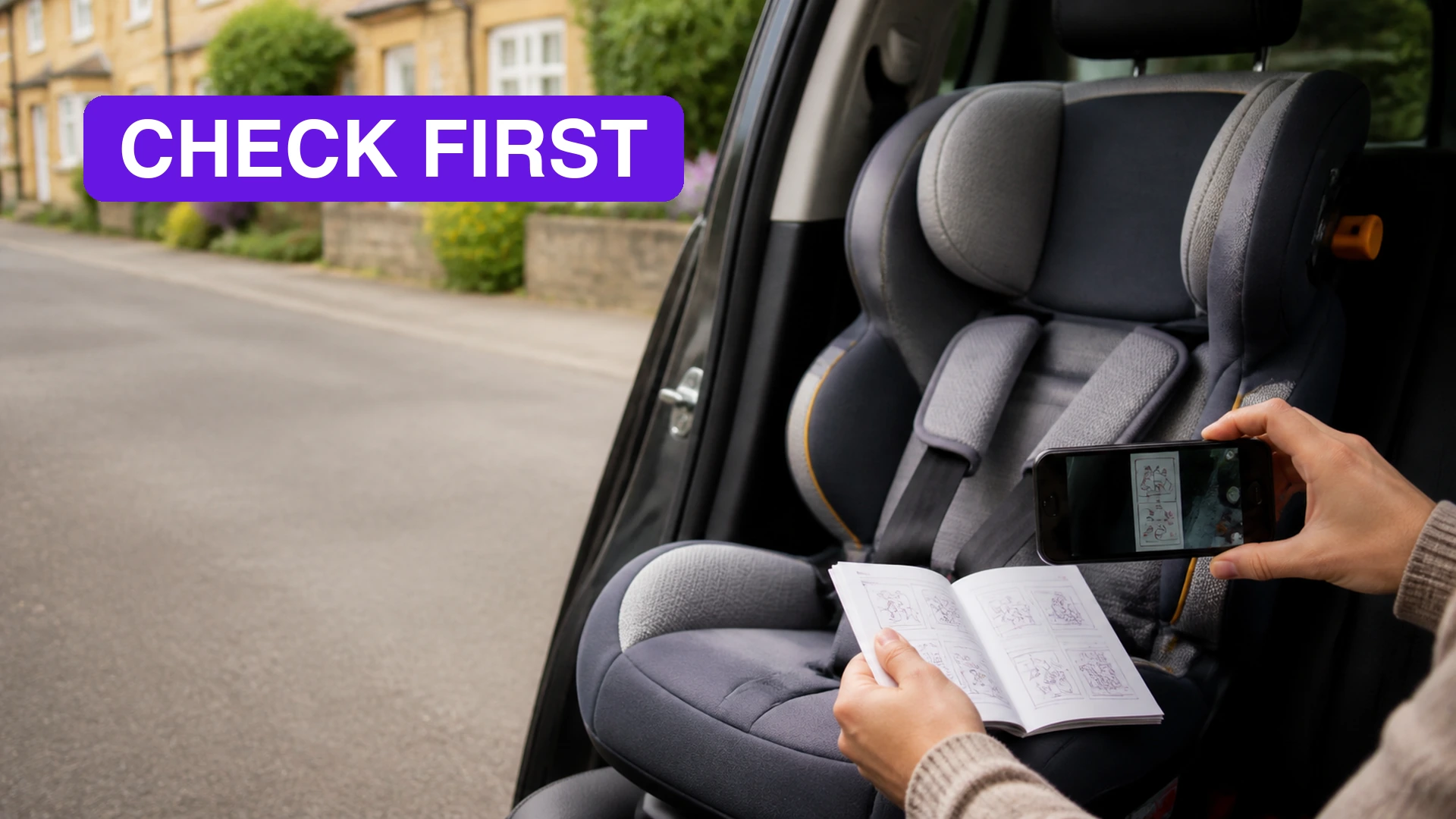
Quick Answer
Pause routine reuse of a child car seat after a crash until you have checked the exact manufacturer’s collision guidance. RoSPA-supported guidance generally favours replacement because weakening may not be visible. Treat a very-low-speed impact as a limited nuance only when every stated condition is considered together. Keep the seat, labels, fitting parts, photographs and purchase information, then choose an approved replacement that suits the child and vehicle before the next journey.
A collision can leave a child seat looking normal while you still question the next journey. That uncertainty is understandable when your child needs transport and an insurer may want evidence. This England-focused guide separates the safety decision, evidence pack and replacement checks without turning guidance into law or promising payment.
This England guide keeps RoSPA-supported advice, GOV.UK rules, manufacturer instructions and insurer evidence decisions distinct. Accident Assist Network coordinates eligible non-fault vehicle support; it does not certify child seats or guarantee reimbursement.
Pause Before Reusing the Seat
Should you use it for the next journey?
Quick answer: Do not treat an undamaged appearance as permission for routine reuse. Preserve the seat and its labels, check the exact manufacturer’s collision instructions and arrange an appropriate approved alternative for any necessary journey. RoSPA-supported guidance generally favours replacement because weakening may not be visible after a collision.
Your first task is not to settle an insurance question or decide who was at fault. It is to prevent an uncertain restraint becoming the default for the next journey. Keep the seat, base, inserts and attachments together where they will not be reused accidentally. Photograph the installed position before anything is moved when it is safe to do so, then record the maker, model, serial or batch details and approval label. Note whether the child occupied the restraint and which belt or attachments were in use. Do not dismantle the seat to search for hidden damage unless its instructions tell you to. RoSPA-supported guidance says a child seat involved in a collision should generally be replaced even if it looks undamaged. That is safety guidance, not a universal statutory replacement rule. Using those exact words helps an insurer or manufacturer understand the rationale without turning guidance into a legal claim. If another journey is necessary, use an appropriate approved restraint that suits the child and vehicle; do not allow a pending cost discussion to make the old seat the temporary answer. Keep the original restraint available until the manufacturer or insurer has explained any evidence, return or disposal requirement. Mark it clearly against accidental use without cutting straps, removing labels or altering parts that may still matter. This sequence creates a calm handover: pause first, preserve what exists, identify the exact product, obtain model-specific guidance and separate safety from reimbursement. Keep each step dated and keep the record together.
- Stop routine reuse.
- Photograph restraint and labels.
- Record occupancy and installation.
- Check exact maker guidance.
- Arrange an approved alternative.
Once the seat is preserved, the next question is why a normal appearance cannot settle its safety.
Why Looks Cannot Prove Safety
Can an undamaged seat still be less protective?
Quick answer: Yes. RoSPA-supported guidance warns that collision-related weakening may not be visible. A careful visual check can document cracks, distortion, labels and fitting parts, but it cannot certify future crash protection. Use photographs as evidence of appearance, then follow the exact manufacturer’s instructions for the safety decision.
Parents understandably trust what they can inspect. A broken buckle, distorted shell or torn harness gives an obvious reason to stop, but a clean-looking surface does not prove that the whole restraint will perform as designed in another collision. This guide cannot diagnose a particular internal change, impact force or hidden component failure, because the frozen evidence contains no authorised examination of your seat. The supported point is narrower: appearance alone cannot establish unchanged protection. Record the seat belt and attachment route too, especially parts that were in use. Keep your language equally careful in correspondence. Write “no crack visible in the photograph” instead of “no damage”, and “manufacturer guidance requested” instead of “seat declared safe”. Accurate observation makes a stronger evidence chain than confident interpretation. The approval label can identify the restraint, but it cannot show what the collision did to it. A buckle that closes during a simple check shows only that it closed at that moment; it does not certify the entire system. Photographs are valuable because they preserve visible condition and context before the vehicle is repaired or the seat is moved. They become misleading only when someone treats them as proof of an invisible conclusion. If a visible fault exists, stop routine use and preserve it. If no fault is visible, preserve that observation and still complete the manufacturer-guidance step. Accident Assist Network cannot change that boundary through a telephone description or photograph because its role is vehicle-damage coordination, not product-safety assessment. Keep that distinction visible.
- Record visible condition.
- Identify the exact model.
- Do not infer hidden condition.
- Use maker instructions.
That observation-versus-proof distinction is essential when the collision is described as only a small bump.
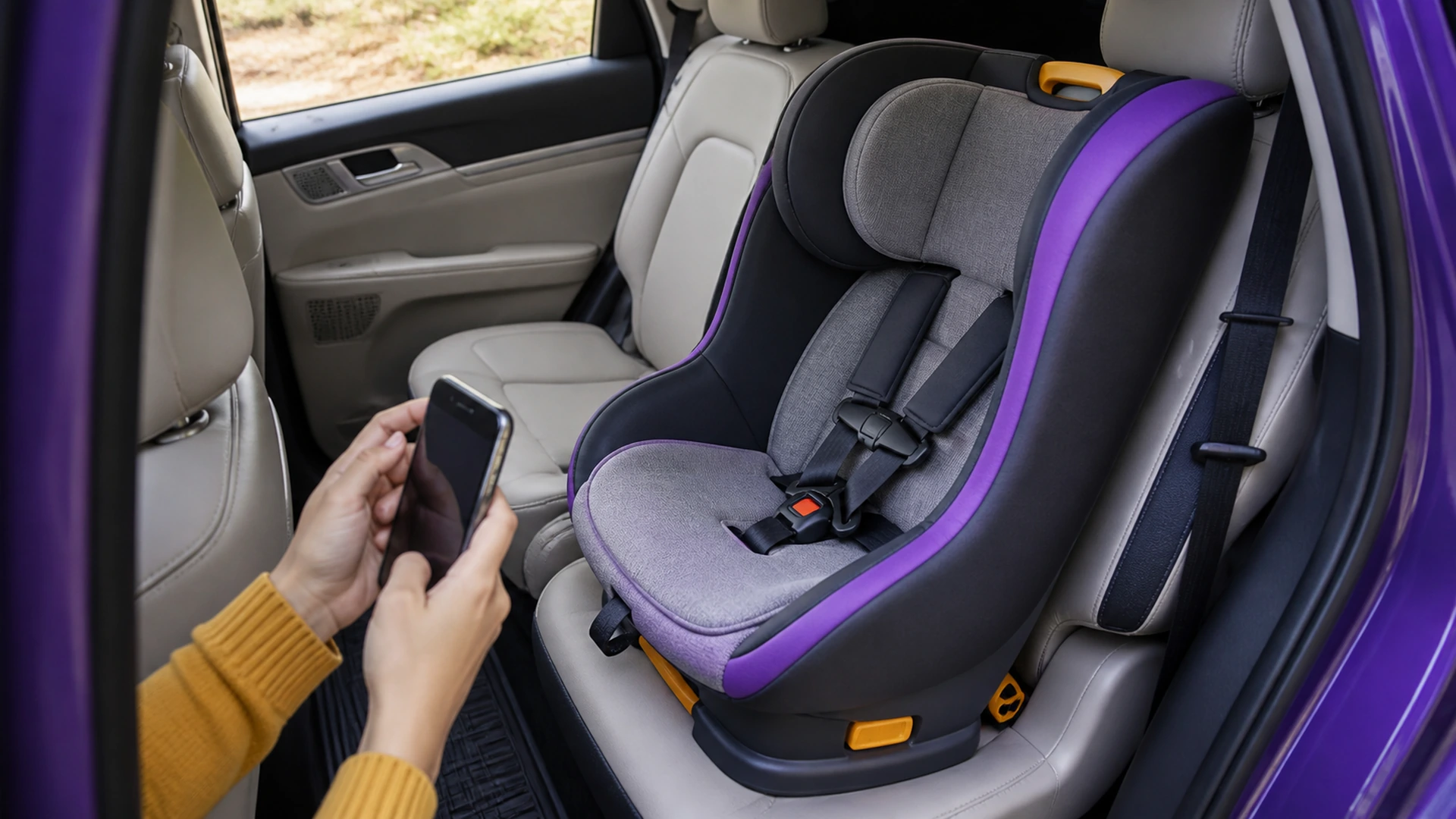
Treat Low-Speed Impacts Carefully
Can a small bump change the guidance?
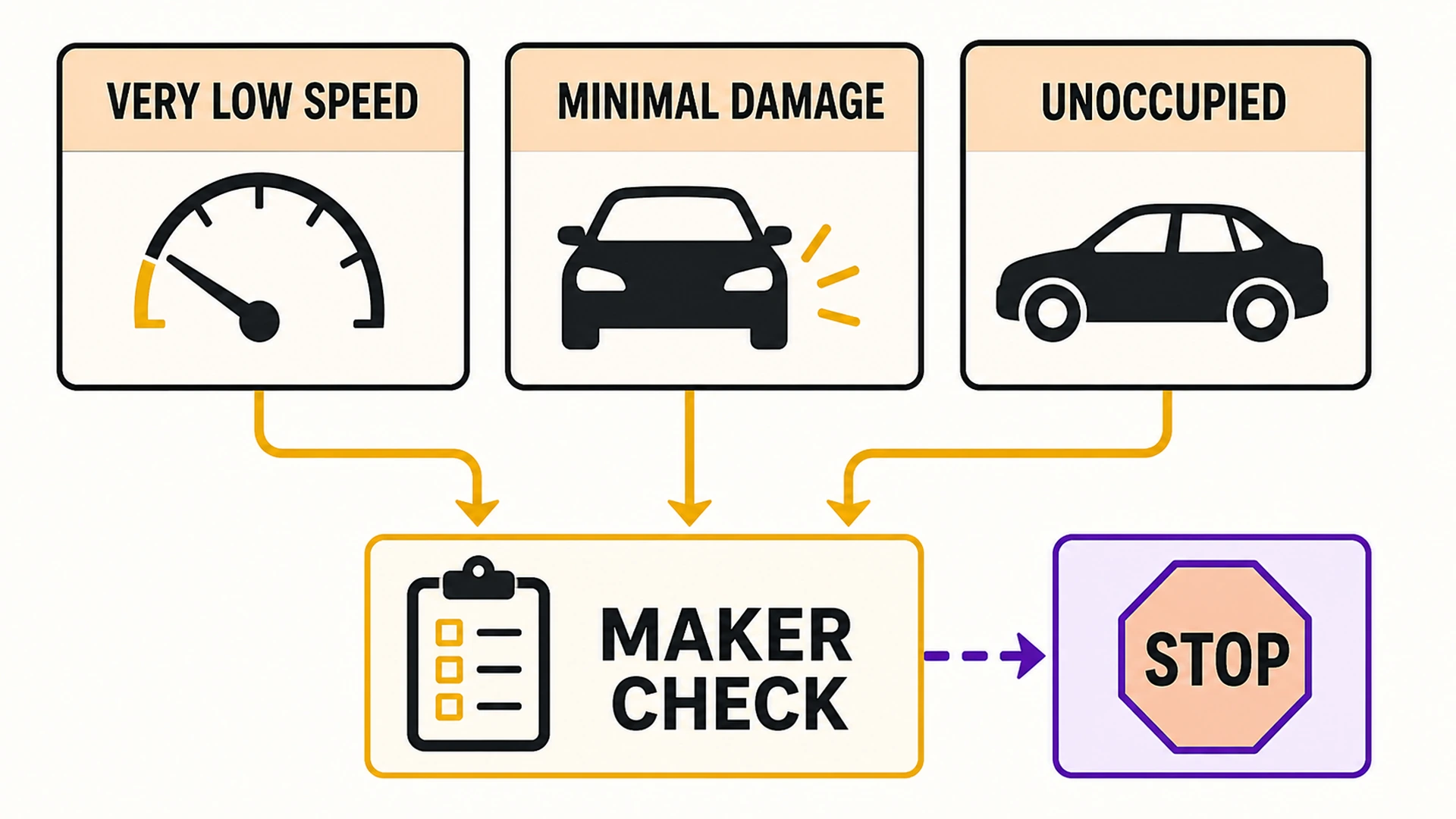
Quick answer: Possibly, but not from speed alone. RoSPA describes a limited situation in which replacement may be unnecessary when the impact was at very low speed, vehicle damage was absent or minimal and no child occupied the seat. Consider every condition together and still follow the manufacturer’s guidance.
The phrase “minor crash” is too loose to act as clearance. One person may mean a parking-speed touch with no mark; another may mean a collision that damaged a panel or moved the vehicle. Do not estimate speed if you do not have reliable evidence, and do not select one reassuring fact while ignoring the others. RoSPA’s nuance keeps very low speed, absent or minimal vehicle damage and an unoccupied seat together. Even if those circumstances appear to match, the source says replacement may not be necessary; it does not declare the restraint safe. The maker’s model-specific instructions still matter. If the facts are disputed, the label is missing or the instructions require replacement, the limited possibility does not become permission to reuse. Where uncertainty remains, the safety-first guidance favours replacement rather than remote self-certification. Record the known collision circumstances in neutral language: where the vehicle was struck, what visible vehicle damage exists, whether the child was sitting in the restraint and how it was installed. An honest “unknown” is safer than a guessed speed. Ask the manufacturer a precise question using those facts and the exact model identifier. Do not ask only whether the event was “small”, because the answer may inherit your undefined description. An insurer may want the same facts for a different purpose, but its reimbursement process does not decide the restraint’s protective condition. Keep those purposes separate throughout. Write down each known condition and any uncertainty before asking the manufacturer to apply its model-specific instructions.
- Confirm genuinely very low speed.
- Confirm absent or minimal damage.
- Confirm the seat was unoccupied.
- Check exact maker guidance.
- Stop when facts are uncertain.
A precise evidence pack now gives the manufacturer and insurer facts they can assess without inheriting your guesses.
Build One Clear Evidence Pack
What should you record and keep now?
Quick answer: Record the collision circumstances, seat occupancy and installation position, photographs, maker, model, serial or batch details, approval label, purchase information and all manufacturer or insurer communications. Keep the old seat until evidence or return requirements are confirmed. Exact requirements vary and do not guarantee reimbursement.
Think of the pack as a factual timeline, not an argument. Begin with the date, place and a plain description of what happened. Add photographs of the complete restraint, base, harness, buckle, attachments, label and relevant vehicle damage. Note where and how it was installed and whether the child was sitting in it. Keep a receipt or order confirmation if available; if it is missing, say so and ask what alternative evidence is acceptable. Save the manufacturer’s reply and each insurer request with its date and reference. A manufacturer scheme may request photographs, crash details, insurance evidence, a police or claim record and proof of purchase, but one scheme’s list must not be presented as universal. RoSPA also publishes an insurer-support letter. It explains the safety rationale; it does not compel an insurer to pay. Keep observation separate from interpretation throughout the record. “Rear passenger-side position” is a fact; “safe position” is a conclusion that needs the applicable instructions. “No mark visible” records appearance; “no damage” may overstate what a photograph can prove. Do not invent a speed, force, fault decision or missing receipt. If an item is unavailable, record that accurately and ask what can substitute. Retain the old restraint and all fitting parts until the relevant organisation gives clear written return or disposal instructions. A well-ordered pack reduces repeated questions and creates a traceable decision trail, but completeness does not create an entitlement. Policy cover, evidence requirements and the insurer’s assessment remain separate from the manufacturer’s safety guidance.
- Record collision facts.
- Capture seat identity.
- Photograph installation and parts.
- Keep purchase evidence if available.
- Save dated communications.
With the old restraint documented, the replacement must be selected by current approval and fit rather than urgency alone.

Choose a Lawful Replacement Seat
Which current rules apply in England now?
Quick answer: GOV.UK says children normally need a child car seat until age 12 or 135 centimetres tall, whichever comes first. Choose a restraint that suits the child’s applicable height or weight route, carries the relevant approval marking, fits the vehicle and follows the maker’s installation instructions.
A quick purchase is not enough; the child, restraint and vehicle must work together. GOV.UK identifies approved height-based seats by an E mark and R129, and approved weight-based seats by an E mark and ECE R44. Keep those approval routes distinct and use the manufacturer’s stated range rather than buying by age shorthand alone. For a height-based seat, the child must remain rear-facing until over 15 months old. Confirm the intended vehicle and seating position are permitted, then follow both the restraint and vehicle instructions. A rear-facing child seat must not face an active front airbag, and a child seat must not be fitted to a side-facing vehicle seat. These statutory selection and fitting rules are separate from RoSPA’s post-collision replacement guidance; neither should be used to rewrite the other. Check the child’s current measured height or weight for the chosen route and confirm the restraint’s stated limits. Look for the correct approval marking on the actual product rather than relying only on a sales description. Check vehicle compatibility, the permitted belt or attachment method and the seating position. If the new restraint resembles the old one, do not copy the former installation from memory: begin with the new instructions. Where fit, label or compatibility remains unclear, obtain competent guidance before travel. The fact that a replacement is new does not make every installation correct. A lawful, appropriate choice depends on the whole set-up, including child fit, restraint approval, vehicle position, direction, airbag status and the maker’s fitting route.
- Check approval marking.
- Check child range.
- Check vehicle compatibility.
- Check direction and airbag.
- Stop if unclear.
The correct label and model are only the start; the final check must cover the complete next-journey setup.
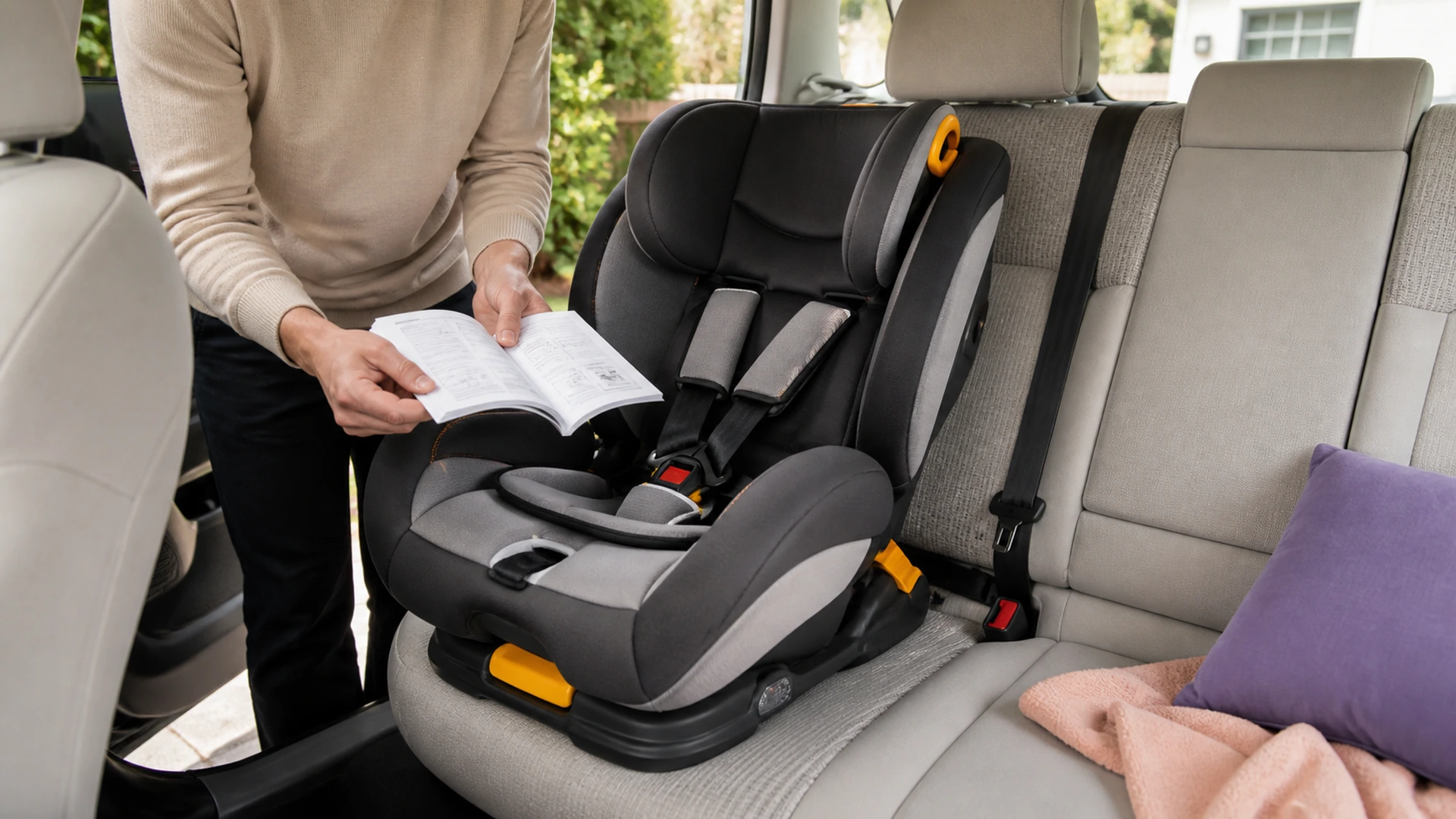
Check Before Travel Resumes
What must be settled before the next journey?
Quick answer: Before your child travels, use an appropriate approved restraint fitted exactly to the seat and vehicle instructions. Confirm the old seat cannot be reused accidentally, retain the evidence pack, notify the insurer and record the manufacturer’s guidance. If any safety or fitting point remains unclear, stop and obtain competent help.
Run the new restraint’s instructions from the beginning rather than copying the old setup from memory. Confirm the permitted seating position, belt or attachment route, harness setting and airbag condition. If another adult fitted it, repeat the check together so the next journey does not depend on an assumption. Keep the old seat, photographs and written responses while the manufacturer or insurer still needs them, and follow agreed return or disposal instructions only when that evidence question is closed. GOV.UK says the accident must be reported to your insurer even when you do not plan to claim. Its wider page also explains detail-exchange and police-reporting duties that can apply after damage or injury; those general steps remain separate because this guide owns the child-restraint decision, not the full accident process. Accident Assist Network may coordinate eligible non-fault vehicle support across England, but it cannot certify the restraint, decide liability or promise reimbursement. Before departure, identify which restraint will be used, why it suits the child and vehicle, and where both instruction sets can be found. Check that no adult could confuse the retained collision seat with the approved travel seat. Confirm that unresolved cost discussions have not altered the safety choice. Keep the evidence record accessible. If uncertainty remains, pause until competent guidance or a correctly fitted alternative is available. This final handover turns separate tasks into one traceable outcome: an appropriate restraint for travel, a preserved record for later questions and no invented certainty about payment or post-crash performance.
- Select an appropriate restraint.
- Follow both instruction sets.
- Check position and airbag.
- Prevent old-seat reuse.
- Notify the insurer.
- Stop if unclear.
That final handover closes the immediate safety loop and leaves reimbursement to its proper evidence-led process.
Sources and further reading
DISCLAIMER:
Accident Assist Network assists you after a non-fault accident by co-ordinating vehicle recovery, reputable repairs, cash-in-lieu settlements for total-loss vehicles, and like-for-like replacement hire—whether for personal use, licensed taxi work or bike—through our network of independent specialist companies across England. Your one call and we sort it all.
Because our role is one of practical facilitation rather than financial advice, we are not authorised by the Financial Conduct Authority, and our services are not covered by the Financial Ombudsman Service or the Financial Services Compensation Scheme.
Our partner companies will always endeavour to help you recover costs from the at-fault insurer; however, if that insurer delays or disputes payment you may become liable for credit services or other charges set out in your contract. Each partner company will supply its own terms and conditions in agreements. Please read every document thoroughly and, if anything is unclear, ask us—or an independent adviser—before signing. We are happy to guide you in the language you feel most comfortable with.
Need practical help in England? Call 020 4577 1120 | WhatsApp 07585 300 600
Frequently Asked Questions
Must every child car seat be replaced after a crash?
Not as a universal legal rule. RoSPA-supported safety guidance says a seat involved in a collision should generally be replaced because weakening may not be visible. It also describes limited very-low-speed circumstances. Consider every stated condition together and follow the exact manufacturer’s instructions rather than treating guidance as statute.
Can I reuse a child seat that looks undamaged?
Appearance alone cannot establish continued crash protection. Photograph the visible condition, labels, harness, buckle, base and attachments, then consult the manufacturer’s model-specific collision guidance. If doubt remains, RoSPA-supported guidance favours replacement; neither a photograph nor a remote conversation can certify your particular restraint.
Does it matter whether my child occupied the seat?
Yes, but occupancy is only one part of the limited low-speed nuance. RoSPA also refers to a genuinely very-low-speed impact and absent or minimal vehicle damage, while manufacturer instructions still matter. Record occupancy accurately, but do not use an empty seat as automatic permission to continue using it.
What evidence might an insurer or manufacturer request?
Requirements vary, but a useful pack can include collision facts, occupancy, installation position, photographs, maker, model, serial or batch details, approval label, purchase information and communications. Ask each organisation for its exact requirements and keep the restraint until return or disposal instructions are clear.
Which approval label should a replacement seat have?
GOV.UK says approved height-based seats display an E mark and R129, while approved weight-based seats display an E mark and ECE R44. The label is only one check: the restraint must also suit the child, vehicle and seating position and be fitted according to its instructions.
What if the insurer questions the replacement cost?
Ask the insurer to explain the policy term and evidence it requires, then provide the preserved record. RoSPA publishes a supporting letter explaining the safety rationale for replacement, but it does not guarantee reimbursement. Keep the safety decision, manufacturer guidance and payment discussion as related but separate records.
Sadaf Javed
Research Team
Sadaf Javed supports source gathering, claim checking, reference review and research notes before final blog publication.